
Top UK Acca Betting Sites for 2026
 Available in US
An accumulator turns a handful of ordinary selections into one bet with a price that compounds leg by leg, and that compounding is the part most worth understanding before a reader picks a bookmaker. The rest of the page is built around that single idea: what an acca actually is, what it costs, what a licensed UK operator is required to do, and where ten brands in particular differ on the ground. Verified as of October 30, 2026 against the Gambling Commission’s public register.
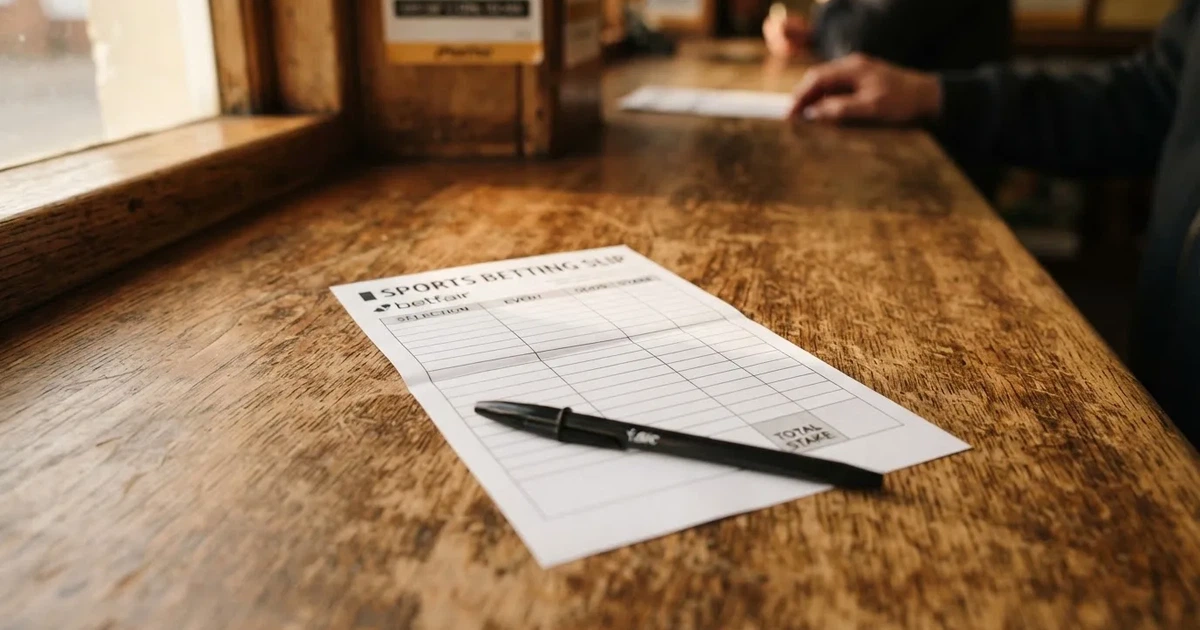
What an Accumulator Is and How It Pays Out
An accumulator links two or more individual selections into a single bet. All legs must win, or the whole bet loses. That single rule is the engine of the price and the source of every other property.
The acca bet meaning is short. A four-fold acca on four teams, all priced at even money, has combined odds of 16.00 in decimal form. A £10 stake returns £160 if all four win and returns nothing if any one loses, ties void or withdraws. The attraction is the multiplication: each leg’s odds are multiplied into one price, so a longshot ladder produces an eye-catching headline. The cost is the all-or-nothing structure. One losing leg voids the bet. There is no “almost”. This is why a small stake on a long acca is a popular shape and a large stake on one is rarely a sensible one.
Decimal odds suit accumulators. The combined price is the product of each leg’s decimal price. Two legs at 1.50 and 2.00 combine to 3.00. Three legs at 1.50, 2.00 and 2.50 combine to 7.50. Fractional odds are converted to decimal before the multiplication (a/b in fractional terms becomes a ÷ b + 1 in decimal), which is the format the betting slip uses. The multiplication is exact, but the price of each leg already contains the bookmaker’s margin, and the margin compounds alongside the price, so the bookmaker’s edge on a long acca is larger than it looks on any single leg.
A leg that pushes is removed. A tied selection, a non-runner, or a match abandoned with no official result is taken out of the acca and the bet is settled on the legs that remain, at reduced combined odds. Cash-out values react to the same rule in real time: a push usually softens the cash-out rather than vanishing it. The treatment of a void leg varies between operators in narrow ways, so the bettor’s own slip is the source of truth at settlement, not the marketing page.
Same-game accas and bet builders are a related shape. A same-game multi, often called a bet builder, combines markets from one event — a home win, both teams to score and over 2.5 goals — into a single price. The arithmetic is the same: legs multiply. The product is a price the bookmaker has built rather than assembled from the open market, and the margin is the operator’s own design. Both kinds pay out the same way, and both lose in full on a single losing leg.
Full-cover bets spread the risk across combinations. A Trixie is a full cover bet on 3 selections made up of 4 bets: three doubles and one treble. A Yankee covers 4 selections in 11 bets. A Heinz covers 6 selections in 57 bets, and a Super Heinz covers 7 selections in 120 bets. The unit stake multiplies by the number of bets, so a 50p Super Heinz at seven selections costs £60 to place. The trade is that a Trixie can still pay out if one of the three legs loses, and a Super Heinz can survive a couple of losers and still return something, where a straight seven-fold acca cannot. The price of a full cover is the combined price of every combination inside it, with the bookmaker’s margin applied to each line. This is where the compounding edge of the operator can become uncomfortable, because the margin on every leg is applied on every combination.
The payout formula is simple and worth memorising. For a single bet, return = stake × odds, and net profit = stake × (odds − 1). For an accumulator the return is the same arithmetic on the combined price, and the bet pays nothing on a single losing leg. The figure a punter sees on the slip is the combined price, and the figure a punter sees in the account is the return after settlement. Both come from the same formula.
The example on this page, using illustrative numbers. A four-leg acca at decimal prices 1.50, 2.00, 2.50 and 3.00, staked at £10, has a combined price of 22.50. The return on a winning bet is £225, of which £215 is profit. Drop any one of the four legs and the return falls to zero. A Heinz on six of the same selections, with a 50p unit stake, costs £28.50 to place across 57 lines and can return something on combinations that survive losing legs; the headline figure, calculated across every line, lands in the low thousands on a clean sweep and is a fraction of that on any partial result. Numbers, not promises. A Heinz at 50p can return around £2,500 on a perfect 6-of-6, and a Super Heinz at 50p is roughly £4,800 on a perfect 7-of-7; the figures assume all selections at the prices used here, and a real slip will show the operator’s own lines.
How Acca Bets Work at a Bookmaker: Selecting, Slipping, Settling
A bet of this kind is constructed in four steps, and the four steps are the same on every licensed UK site.

The selection. A punter opens a market, picks a price, adds it to the slip. Adding a second selection from a different event turns the slip into an accumulator by default, on most sites, and the combined price appears as the legs are added. A punter who wants a single bet on the first selection confirms the bet before adding a second.
The slip. The slip shows each leg, the combined decimal price, a stake box and the projected return. The price refreshes as odds move, which can change the projected return between the slip opening and the bet being placed. Some operators offer a “lock the price” option for a few seconds; most do not.
The acca insurance or acca boost. A small number of promotions ride on top of the slip. Acca insurance refunds a stake as a free bet (not cash) if one leg of, say, a five-fold or longer lets the bet down. Acca boost adds a percentage to winnings on a winning acca past a stated number of legs. Neither changes the underlying price; both change what a winning bet pays. Both come with conditions on the number of legs, the minimum price per leg, and the sport, and the conditions are the part that costs the punter if they go unread.
Settlement. After the last leg is complete, the bet settles as won, lost, or partially won if a leg has been voided. A free-bet refund from acca insurance lands as a free-bet token with its own expiry and its own minimum price, not as cash. Cash out, where available, settles the bet early at a figure the operator calculates from current prices, and the figure rarely matches a simple proportion of the final value because the bookmaker’s margin runs through it.
The two mechanics most often missed at this stage are the minimum price per leg on a free-bet or acca-insurance promotion, and the expiry of the free-bet token when one is issued. A punter who fails the minimum price forfeits the offer entirely on some sites and partially on others, and a free-bet token that expires unused is the offer walking away. Reading the small print once is cheaper than learning it on a settled bet.
Acca Bets Explained: How the Bookmaker’s Margin Compounds
Every decimal price carries a margin. The margin is the share of every £1 staked across all outcomes of a market that the bookmaker keeps on average. It is not a fee charged to the punter, and it is not a “vig” added on top; it is built into the prices themselves, distributed across the outcomes so the book of outcomes sums to more than 100%.
The arithmetic is the standard one. On a two-outcome market priced at 1.91 and 1.91, the implied probabilities sum to 1 ÷ 1.91 + 1 ÷ 1.91 = 1.0471, and the margin is 1 − 1 ÷ 1.0471, or roughly 4.5%. On a three-outcome 1X2 priced at 2.10, 3.40 and 3.50, the implied probabilities sum to 0.4762 + 0.2941 + 0.2857 = 1.0560, and the margin is about 5.3%. The exact figure depends on the event, the market and the operator.
The margin compounds on an accumulator. A 5% margin on each leg does not become 5% on a four-fold acca; it becomes roughly 1 minus the product of the four payout shares, which lands at about 18.6% for a 5%-per-leg example. Each leg’s edge multiplies into the next, the same way the prices do. The effect is mechanical, not editorial: the longer the acca, the larger the operator’s edge baked into the headline price. A 10-leg acca at a 5% per-leg margin is closer to 40% margin on the overall bet. This is why the operator prefers a long acca and the punter’s expected return is the price minus the compounded edge.
Where the margin is thinnest. The most efficient markets on a typical UK sportsbook are the Premier League 1X2 and the bigger horse-racing meetings, with margins often in the 3% to 6% range on the headline market. Smaller leagues, props and same-game multis are usually wider, in the 5% to 10% range, and niche or in-play markets can run higher still. The bookmaker’s own margins are not published, but the figures can be reconstructed by summing the implied probabilities across all outcomes of a market on the operator’s site. A punter who wants a sharper price picks the sport, the market and the operator accordingly.
What this means for acca choice. A short acca (two or three legs) on competitive markets is the cheapest shape, in margin terms, the operator offers. A long acca on niche markets is the most expensive. The compounding effect is the same in both directions, but the starting margin is the difference between an edge the punter can live with and one they cannot. The bet builder is a related point: the same-game multi’s price is built by the operator, not assembled from the open market, and the margin on it is whatever the operator has chosen to set. A bet builder is convenient, and a bet builder is rarely the cheapest line on the slip.
The 10 UK-Licensed Bookmakers Compared
Ten sites hold a Gambling Commission remote licence for general betting on real events and offer accumulators on their sportsbook. The comparison below is the kind a punter would build themselves from the Commission’s public register, with each operator’s own acca-related terms from the sites and apps as they appear to customers in Great Britain.
| Brand | Licence | What the operator’s own terms state on the acca |
|---|---|---|
| bet365 | Remote general betting standard (real events), Hillside (UK Sports) ENC | Bet Builder+ for same-event markets, daily Bet Boosts, Super Boosts and Winnings Boosts on Bet Builders and selected singles |
| Geoff Banks | Remote general betting standard (real events), GB Sports Advisors Limited | Live in-play prices and ante-post prices on future events; slip allows multi-event accumulators |
| Kwiff | Remote general betting standard (real events), Eaton Gate Gaming Limited | Supercharge can boost acca and single prices, for example from 2/1 to 20/1, on any sport |
| Fitzwilliam Sports | Remote general betting standard (real events), SBKI Limited | Prices tied to Oddschecker’s average for each selection; standard slip supports accumulators |
| Dabble | Remote general betting standard (real events), Dabble Sports UK Ltd | Free-bet tokens have a 7-day expiry with the stake not returned; minimum odds apply |
| Swifty Sports | Remote general betting standard (real events), Swifty Global (UK) Ltd | Cash Out, daily price boosts, in-play and live streaming; Bet Builder is listed as coming soon |
| Octobet | Remote general betting standard (real events), Octopus Game Limited | Best Odds Guaranteed on UK and Irish horse racing, capped at £150 per customer per race |
| BetGoodwin | Remote general betting standard (real events), Goodwin Racing Limited | Welcome offer is a £5 sports bet, a £5 acca and a £5 Sub-Cover bet on a £10 stake |
| Betfred | Remote general betting standard (real events), Petfre (Gibraltar) Limited | Bet Builder, Sub Switch, Extra Places and standard multi-event accumulator slip |
| BetUK | Remote general betting standard (real events), LeoVegas Gaming PLC | Free-bet tokens exclude virtual sports, esports and non-UK/IE horse racing; minimum odds apply |
Every one of these brands is on the Commission’s public register, and every one is a member of GAMSTOP, which is a mandatory licence condition for online operators. The register is the test of who holds a licence; this list is a sample of ten, not the whole market.

The Licensed UK Bookmaker Landscape in 2026
The British online betting market runs on a single framework. The Gambling Commission licenses the operators, the LCCP sets the conduct rules, and the ASA enforces the advertising rules outside the licence. That is the spine of the market; everything else in this section hangs from it.
The licence is at the point of consumption. Since the Gambling (Licensing and Advertising) Act 2014, an operator whose remote facilities are used in Great Britain needs a Commission licence wherever it is based. A Curaçao, Maltese or Gibraltar registration is not a substitute, and a domain ending in .co.uk proves nothing on its own because licensed UK brands run on .com as freely as on .co.uk. The test of who is licensed is the Commission’s public register, and a search by business name, trading name, domain or account number is what confirms a brand.
There is no state monopoly and no statutory cap on licences. The number of operators is set by the market, not the regulator, and several brands can run under one licensee. Ladbrokes and Coral share a parent; Paddy Power and Betfair share a parent. The shape of the industry is a long tail of small brands feeding into a small number of licensees, and the consumer-facing brand is often the smallest unit of choice.
The licence categories matter at the edges. Remote general betting standard (real events) is the standard sportsbook licence. Remote general betting standard (virtual events) is a separate category. Pool betting, betting intermediary (the exchange licence), and remote general betting limited are different categories with different scope. An operator with a real-events sportsbook licence does not automatically offer virtual events, and an exchange runs under a different licence type to a traditional bookmaker. The category the operator holds is on the public register alongside the account number.
Betting tax is the operator’s, not the punter’s. General Betting Duty is the operator’s tax on gross profits, currently 15%, and a 25% remote rate applies from 1 April 2027 within it on bets that are not on UK horse racing, not on self-service betting terminals in licensed premises, not pool betting and not in-person betting. The punter pays no tax on winnings in Great Britain, with the usual caveat that a professional gambler should ask HMRC or an adviser. Whether the operator passes the duty through prices is not established, and a page should not claim that it does.
In-play, esports and novelty markets are all inside the same licence category. The Commission does not publish a list of permitted markets. An operator with a remote general betting licence offers what its own rules allow, and the LCCP sets the conduct standards. In-play is offered by UK bookmakers under their own licence conditions. Esports is treated as a sport for licensing purposes. Politics, TV and novelty markets are offered by some operators and are not statutorily prohibited. The market is open in scope, and the constraint is the operator’s own commercial decision, not a Commission rule.
Spreadex is regulated by the FCA for spread betting, separately from the Commission for fixed odds. Financial spread betting sits under the Financial Conduct Authority, and spread-betting losses on a Spreadex account can exceed deposits, a point Spreadex states on its own homepage. A reader who sees a Spreadex account advertised as FCA-regulated is looking at the spread-betting side; the fixed-odds sportsbook is a Commission licence and the protections are those of any other GB-licensed sportsbook, with the spread-betting risks not applying to the fixed-odds product.
Kalooki Sportsbook is operated by Kalooki Sports Book Ltd (company number 12938274) and licensed under Commission account 57730. It is a GAMSTOP member and follows the standard identity-verification rules. The brand is small relative to the high-street names, and the smallness is a deliberate editorial point: the Commission’s register lists hundreds of remote betting licences, and a shortlist of ten is a sample, not a ranking.
Midnite’s site cites Commission licence 101839 and shows in-play events, an acca builder, popular accas and price boosts with maximum-stake limits. The brand is in the same regime as the others, with the same verification, the same GAMSTOP coverage and the same bonus-cap exposure, and the differences are at the product level: an acca builder as a named feature, price boosts on the slip, a maximum-stake limit on those boosts.
Unibet has operated since 1999 and runs its UK site under Platinum Gaming Limited, Gibraltar, on Commission account 45322. The 1999 foundation date is the long-history point; the Commission account is the current licence. A reader who treats the foundation date as a substitute for the licence is looking at the wrong document.
How a UK Gambling Commission Licence Is Verified
The Commission’s public register is the only place a brand is “licensed” or “not licensed” in the way the term is meant. A short routine confirms it.
The search is by business name, trading name, domain or account number. Each result shows the licence number, the categories the licence covers, the status, and the trading and licensed names. The status field is the only test: “Active” means the operator is licensed and trading; “Surrendered” or “Revoked” is the opposite and a brand in that state should not be used. The licence number printed on a brand’s homepage or in its app is a useful cross-check, and a brand that prints no licence number, or prints one that does not resolve on the register, is a brand to avoid regardless of its marketing.
The register is also the place to confirm who actually holds the licence. A trading name is not always the licensee. Several consumer-facing brands sit under a single corporate parent, and the corporate parent is the entity the Commission has licensed. Knowing the parent matters when a complaint goes in: the regulated entity is the parent, not the trading name.
A reader who has not registered with a brand and wants to check it before signing up can do so without creating an account. The register is the test, the licence is the artefact, and the access date is the moment the register was last looked at. The number of operators on the register changes week by week as licences are issued, surrendered and revoked, and a count printed without an access date is a count that has already gone stale.
Responsible Gambling: Player Protection at a Licensed UK Site
GAMSTOP is the national multi-operator self-exclusion scheme and is a mandatory licence condition for online operators. The exclusion periods are six months, one year, five years, or five years with auto-renewal, and after the minimum period the exclusion stays in place for a further seven years unless the customer asks GAMSTOP to remove it. GAMSTOP covers online sites and apps; betting shops run a separate, in-shop self-exclusion scheme. A punter who has registered with GAMSTOP cannot open a new account at any participating operator for the duration of the exclusion, and an account that already exists is closed.
A financial vulnerability check applies to licensed remote betting when a customer’s deposits minus withdrawals exceed £150 in a rolling 30 days. It is a public-record check, not an income check and not a credit reference check. Bankruptcy and county court judgments are the kind of record the check looks for. A punter whose deposits stay below the £150 in 30 days will not see a financial vulnerability check; a punter whose deposits cross the threshold will. Financial risk assessments, the press’s “affordability checks”, are announced in a staged plan with no start date. The honest framing is “announced, staged, no start date”.
Deposit limits are a customer-set tool, and the operator must offer them on a fixed time frame. The first changes to those limits have applied since 31 October 2025, a second phase was postponed to 30 September 2026, and whether it is currently live is not established. There is no state-set deposit or loss ceiling for betting: limits are the customer’s choice, and a punter who wants a hard ceiling sets it themselves through the operator’s responsible-gambling tools, or through GAMSTOP for a hard block across operators.
Identity verification runs before the first deposit or the first bet, including with a free bet or a bonus, and it has run since 7 May 2019. The verification checks name, address and date of birth. There is no anonymous play at a licensed site. A punter who wants to keep their betting light will find the verification is a one-off hurdle; a punter whose deposits cross the financial-vulnerability threshold will see further checks on top of it. The cost of the regime is the loss of anonymity, and the benefit is the consumer-protection framework: a licensed site that fails its customer has a regulator the customer can complain to.
The help lines are independent of the operators. GamCare runs the National Gambling Helpline. GambleAware funds treatment and education. The NHS runs gambling clinics. Gamblers Anonymous runs peer-support meetings. A punter who feels their betting has moved from a choice to a need can reach any of these directly, and the operators’ own safer-gambling pages link to the same services.
Bonuses and Free Bets on Accas: What the Marketing Words Mean
A bonus is a marketing offer with a price tag, and the price is the wagering requirement, the minimum price, the expiry and the product exclusions. A “100% bonus” is a matched deposit; a “free bet” is a stake the operator provides, usually without the stake being returned on a win; a “boosted odds” offer is a one-off price uplift on a named selection. The CAP Code and the LCCP cap wagering requirements on bonuses at 10x, so a £10 bonus with a 50x requirement is no longer offered by a licensed UK site, and a £10 bonus with a 10x requirement asks for £100 of qualifying bets before the bonus and any winnings are withdrawable. Mixed-product promotions, an offer that requires gambling on two or more product types such as betting, casino, bingo and lottery, are banned under the rules in force since 19 January 2026, and a licensed UK book will not run an offer that ties a sportsbook bonus to a casino spin. Whether the 10x cap applies to a free bet with no wagering condition, and any cap on the money value of a bonus, are not established.
The free-bet stake is usually not paid back. A £10 free bet at 5.00 returns £40, of which £40 is profit, not £50. The slip shows the projected return with this rule applied. A punter who reads the slip as “stake plus winnings” on a free bet is reading it wrong, and the difference is the stake. The free-bet value is a real number, not a marketing one, and the free bet is worth less than its face value on every price below infinite.
Minimum odds change the qualifying bet. A welcome offer that requires a first bet at minimum odds of 1/2 (1.50) on a football acca is asking the punter to add at least one leg at 1.50 or shorter. A punt on a longer-priced leg does not qualify on its own, and on some offers the punter’s whole acca is invalidated when a leg falls under the minimum, while on others the qualifying bet is the single selection that meets the threshold. The rule is per operator and per offer.
The expiry is a hard deadline. A free-bet token that expires unused is the offer walking away. Seven days is a common expiry on a sports free bet, and Dabble’s app makes the seven-day rule explicit. A punter who places the qualifying bet on a Wednesday and forgets the free bet has lost the offer by the following Wednesday.
Acca insurance is a partial safety net. The offer refunds the stake as a free bet, not as cash, if one leg of a five-fold (or longer) acca lets the bet down. The refund is a token with its own expiry and its own minimum price, and a punter who does not place the refunded free bet within the window loses the value. Acca insurance does not cover a non-runner, a void leg or a Rule 4 deduction; it covers only a losing selection.
Acca boost is a percentage uplift on winnings. A 10% acca boost on a winning six-fold adds 10% to the profit. The boost is paid as cash, not as a free bet, on most offers, and the boost is paid on top of the regular return. The cost is a higher minimum number of legs and a higher minimum price per leg, and the boost is usually capped at a maximum boost amount.
The 10x cap is the new line in the sand. A licensed UK book that offers a bonus cannot ask for more than 10x the bonus amount in wagering. A £10 bonus means at most £100 of qualifying bets. A free bet with no wagering condition is a different product, and the cap’s application to a no-wagering free bet is not established. Either way, the punter’s calculation is the same: divide the bonus by the wagering multiple to get the required turnover, divide the turnover by the stake per bet to get the number of bets, and check the minimum price per bet.
A worked reading of a typical free bet. A £10 free bet at 2.00 with the stake not returned has a payout of £20 (profit £10). The free bet’s value to the punter is the profit, not the payout, and the value is lower on shorter prices and higher on longer ones. A free bet on a 5.00 acca leg is worth roughly four times as much as a free bet on a 1.50 leg, before minimum-price conditions kick in.
How to Build an Acca Today: Strategy, Form, and a Word of Warning
A punter who is building an acca today is, by definition, predicting the outcomes of two or more events whose results are not yet known. The “best acca bets today” framing in the press is a selection of matches, not a forecast. A page that names winners is naming an outcome nobody can know, and a reader who acts on a named winner is betting on the page’s word, not their own. The honest shape of an acca strategy is a list of constraints the punter sets, not a list of selections a page has made.
A stake the punter can afford to lose. Every leg has to win, and the bet pays nothing on a single loser. The stake is the loss on a busted acca, and the stake should be the figure the punter is comfortable losing on a long-shot bet. The temptation to stake more on a long acca is the marketing-amplified mistake, because the projected return looks larger in absolute terms even though the probability of collecting is much smaller.
A short list of legs, with reasons. Two or three legs with a clear reason for each is a different bet to ten legs with a headline price and no reasoning. A leg the punter cannot explain in a sentence is a leg added for the price, and a price is not a reason. The price compounds the legs the punter has reasons for, not the other way around.
A minimum price the punter is comfortable with. A 1/20 (1.05) leg will almost certainly win, and a 1/20 leg is a margin carrier. Adding 1/20 legs to extend an acca inflates the price marginally and the compounded margin by more. The shape is the opposite of what the punter wants, and the punter is better off with a smaller number of stronger-priced legs than a longer list of 1/20 anchors.
A bookmaker whose markets the punter is comparing. A 1X2 on the same match will carry a different margin at different operators, and the difference is sometimes 1% to 2% on a major match. A punt on the lowest-margin book is the same bet at a sharper price. The compounded edge across an acca is non-trivial, and the time spent comparing two or three bookmakers is often worth more than the time spent finding a fifth leg.
An acca insurance or acca boost with the conditions read. The refund is a free bet, not cash. The minimum number of legs and the minimum price per leg are the conditions that filter the offer’s reach, and a punter who fails the conditions is not entitled to the offer. A 10% acca boost on a five-fold is not the same offer as a 50% boost on a ten-fold, and the conditions are the difference.
A free-bet token used on a price the punter actually likes. A free bet at 1.50 is worth less than half a free bet at 3.00 in expected-value terms, and a free bet at 10.00 is worth almost the face value. The punter’s choice is the leg the free bet goes on, and the longer the price, the higher the expected value, subject to the offer’s minimum price and maximum odds.
A word of warning about predictions. “Best football acca bets today” is a marketing phrase. It names matches, not outcomes. A tipster who claims a hit rate is a tipster whose claim cannot be independently audited. A page that lists winners is a page that cannot know them, and a reader who bets on a named winner is betting on the page’s word. The strategy above is the structure of a sound bet; the predictions above are the structure of an unverified claim. The two are different products.
Payout Worked Through
The payout formula is the same on every acca: return = stake × combined odds, with profit = return − stake. The combined odds are the product of each leg’s decimal price, and a single losing leg voids the bet.
An illustrative acca at decimal prices 1.50, 2.00 and 2.50, with a £10 stake. The combined price is 1.50 × 2.00 × 2.50 = 7.50. A winning bet returns £10 × 7.50 = £75, with a profit of £65. The same stake on a four-leg acca at 1.50, 2.00, 2.50 and 3.00 returns £10 × (1.50 × 2.00 × 2.50 × 3.00) = £225, with a profit of £215. The figure is exact, and the figure assumes all legs win, all at the prices stated, and a stake of exactly £10.
An illustrative full-cover at 50p per line, on three selections at 1.50, 2.00 and 2.50. A Trixie is four bets at 50p, total stake £2. The maximum return, all three legs winning, lands in the low £20s from the doubles and the treble combined, against a £2 outlay. The bet can return something on combinations that survive a single losing leg, and the figure depends on which leg loses. The illustrative Heinz on six selections and the Super Heinz on seven have their own maximums and partials, and a real slip shows the operator’s own lines, not these illustrative ones.
The key assumption in every figure above. The figures assume the prices stated and all legs winning. A real bet on a real fixture will not match the illustrative prices, and a real bet on a real fixture will not see all legs win. The figures are a worked example of the formula, not a forecast of any punter’s return. The expected return on an acca at a 5% per-leg margin is the combined price × (1 − compounded margin), and the compounded margin on a three-leg acca at 5% per leg is roughly 14.3%; a punter with that exposure is paying around 14% of stake as the operator’s edge.
A Closer Read of the Ten Brands
A brand-by-brand read of what each operator actually offers the acca punter, with the licence and the product features the operator’s own app or homepage states.
bet365. A Gambling Commission remote licence for general betting on real events, the holder Hillside (UK Sports) ENC. The app features Bet Builder+, which combines markets from one event into a single bet pre-match and in-play, Super Boosts, Winnings Boosts on Bet Builders and selected singles, and daily Bet Boosts. The acca slip supports multi-event accumulators, and the Bet Builder+ product is the same shape as an acca, applied to one event. The app’s depth is its strong point, and the price-boosting on acca-winning slips is a meaningful uplift to a long-shot acca. The verdict: a strong default for a punter who wants a single app that covers most acca shapes, with the trade that the breadth of markets comes with a brand whose marketing is louder than its smaller rivals.
Geoff Banks. A Gambling Commission remote licence, the holder GB Sports Advisors Limited. The app offers live in-play prices and ante-post prices on future events, and the slip allows multi-event accumulators. The brand is small relative to the high-street names, and the smallness is the point: a punter who wants a quieter product with a tighter focus on racing and football ante-post gets a cleaner app than the multi-product giants. The verdict: worth a look for a punter who has decided they want a smaller, racing-led bookmaker with standard acca support; less suited to a punter who wants bet builders, in-play boosts and acca insurance as a bundle.
Kwiff. A Gambling Commission remote licence, the holder Eaton Gate Gaming Limited. The headline product is Supercharge, which can boost the odds on a bet from, say, 2/1 to 20/1, and the boost applies to single or multi bets on any sport. The boost is not a small uplift; it is the product, and a punter who wants the surprise of a heavily boosted price gets the surprise on every bet. The downside is the underlying price before the boost, which is the operator’s ordinary margin, and a punter who treats the boost as a guaranteed uplift is reading the marketing rather than the slip. The verdict: the right book for a punter who wants the Supercharge feature as a feature; less suited to a punter who wants a stable price across a long acca and is not interested in the boost mechanic.
Fitzwilliam Sports. A Gambling Commission remote licence, the holder SBKI Limited. Prices are based on Oddschecker’s average price for each selection, and the apps run on Apple and Google. The brand is a price-taker rather than a price-maker, and a punter who wants a market-average price on every leg gets that, leg by leg. The trade is the absence of a strong differentiating product feature, and a punter who wants acca insurance or a same-game multi in the same app will not find them. The verdict: a sharp price on every selection, with the trade that the brand is thinner on features than the larger rivals; a useful second bookmaker for a punter who is comparing prices on a specific acca.
Dabble. A Gambling Commission remote licence, the holder Dabble Sports UK Ltd. The welcome offer is a £10 free bet on a £10 first deposit, with a 7-day free-bet expiry, the stake not returned, and minimum odds applying. The app’s social-feed style is the brand’s distinguishing feature, and the betting product is the standard acca, single, and bet-builder shape. The verdict: a clean welcome for a punter who wants a quick acca with a free-bet tail; the expiry is tight, and a punter who does not place the free bet within seven days loses the offer.
Swifty Sports. A Gambling Commission remote licence, the holder Swifty Global (UK) Ltd. The app offers Best Odds Guaranteed, Cash Out on markets including horse racing and football, daily price boosts, live streaming and in-play betting, with Bet Builder listed as coming soon. A punter who wants a BOG-on-racing product with cash-out and in-play in the same app gets most of the bundle, and the bet-builder product is the gap. The verdict: a credible racing-led bookmaker with the standard acca slip; a punter who needs bet builders today will need a second app until the feature ships.
Octobet. A Gambling Commission remote licence, the holder Octopus Game Limited. The headline feature is Best Odds Guaranteed on UK and Irish horse racing, capped at £150 per customer per race. A punter who bets into the morning of a race and watches the SP return a higher price gets the BOG price, and the cap is per-customer, not per-race-meeting. The cap is the constraint, and a punter with a larger stake on a single race will not be fully covered. The verdict: a credible BOG book for racing-led punters; a punter with a large single-race stake will read the £150 cap before placing the bet.
BetGoodwin. A Gambling Commission remote licence, the holder Goodwin Racing Limited. The sports welcome offer is a £10 stake returning £15 in free bets, made up of a £5 sports bet, a £5 acca and a £5 Sub-Cover bet. The brand is racing-led, and the Sub-Cover is the differentiator: a free bet on a named racing product. A punter who bets the £10 across racing and football in the first week gets the three tokens in return, each with its own conditions. The verdict: a tight welcome offer for a racing-led punter, and the Sub-Cover is a different shape from the standard sportsbook free bet; a punter who does not bet on racing will leave the Sub-Cover unused.
Betfred. A Gambling Commission remote licence, the holder Petfre (Gibraltar) Limited. The app features Bet Builder, Sub Switch, Racing Post data, Extra Places, live casino and bingo. The acca slip is standard, the Bet Builder is the same-game multi product, and the Sub Switch is a racing-specific product that lets a punter substitute a non-runner in a multi-leg racing bet. A punter with a racing-heavy book gets a coherent bundle, and a punter with a football-led book gets a Bet Builder. The verdict: a full-feature UK bookmaker, well-suited to a punter who wants both the racing product and the football product in the same app; a punter with a narrow product focus will leave most of the features unused.
BetUK. A Gambling Commission remote licence, the holder LeoVegas Gaming PLC. The free-bet terms exclude virtual sports, esports and non-UK/IE horse racing, with minimum odds applying. The exclusion list is the constraint, and a punter whose acca is on a Saturday’s European horse racing or a virtuals accumulator will not be covered by a free bet from this brand. A punter whose acca is on Premier League football and the bigger UK and Irish meetings gets the full cover. The verdict: a clean app for a UK/IE football and racing punter, with the trade that virtuals, esports and foreign racing punters are not the target market.
The Bet That Pays Nothing: A Note on All-or-Nothing
A final caution worth its own short section. An acca is the bet where the marketing is loudest and the punter’s edge is smallest. The compounded margin is the mechanism: every leg’s edge multiplies into the next, the headline price is high in absolute terms and the expected return is lower than it looks. A punter who runs an acca as a long-shot bet, with a stake sized to the loss, treats the acca as a lottery ticket. A punter who runs an acca as a serious bet, with a stake sized to the upside, is paying the compounded margin on a price that is unlikely to clear. The honest framing is the second one: an acca is a high-variance product, and the high variance cuts both ways, but the variance is the punter’s and the compounded margin is the operator’s.
A bet builder is the same shape, applied to one event. The price is operator-built, the margin is operator-set, and the convenience of one click is the cost of a higher edge. A punter who treats the bet builder as a free convenience is paying for it on every line.
The combination of an acca with a free bet or a boost is a third shape, and the third shape is the most expensive of the three. The free bet’s stake is not returned, the boost is a percentage uplift on winnings, and the underlying price still carries the compounded margin. The product is a long shot with a marketing top-up, and the marketing top-up is a small fraction of the underlying edge. A punter who values the free bet for what it is, a small uplift on a long-shot bet, gets the value; a punter who values it as a discount on the operator’s price gets nothing of the sort.
The single best framing is the one that holds across all three shapes: the acca is a high-variance, high-edge bet, and the edge compounds with the length of the bet. A punter who is comfortable with that trade treats the acca as a real product. A punter who is not should not be building one.
Offshore Sites and the Loss of Protection
A site without a Gambling Commission licence is not illegal for the customer, and a page should not call it “illegal to use”. The cost is the loss of the protection the licence provides. A punter at an unlicensed site has no GAMSTOP coverage, no Commission complaints route, no approved dispute-resolution body, no British consumer redress if funds are withheld, no exposure to the 10x bonus cap, and no exposure to the £150 financial-vulnerability check. The site’s own terms govern the relationship, and the site’s own terms are what the punter has agreed to.
Enforcement is at the operator, not the customer. The Commission can issue cease-and-desist notices, refer sites to search engines, work with registrars, hosts and payment providers, and seek court orders for DNS blocking. The Commission’s blocking powers are not the same as ISP-level blocking in operation across the market, and a page should not write that ISP blocking is the current state of play. The honest framing is “licensed = checks, limits, GAMSTOP, bonus cap, but also verification before the first bet; unlicensed = none of those protections and possible loss of funds”. Neither is “the safe choice” by default; the licensed site is the consumer-protected choice, and the unlicensed site is the unprotected one.
A punter who chooses an unlicensed site is choosing the absence of the British framework. The site may be regulated elsewhere, and a Curaçao, Maltese or Gibraltar registration is a real regulatory frame in its own jurisdiction. It is not a substitute for the British one, and a punter who is comparing brands should compare the framework, not just the price.
Frequently Asked Questions
What are acca bets?
An acca, short for accumulator and also called a parlay or multi, is a single bet that links two or more selections. All legs must win for the bet to pay out, and the combined decimal price is the product of each leg’s price. A single losing leg voids the bet entirely. The format is the standard shape on every UK-licensed sportsbook, and the slip shows the combined price as legs are added.
How do accumulator acca bets work?
Each leg’s decimal odds are multiplied together to give the combined price, and the return on a winning bet is the stake multiplied by that combined price. A void leg is removed and the bet settles on the remaining legs at reduced combined odds. A non-runner is treated the same way. The all-or-nothing structure is the property that drives both the headline price and the risk, and a punter who understands the multiplication understands the acca.
Can you use acca freeze on free bets?
Acca freeze is a feature offered by some operators that locks a leg’s price while the rest of the slip is being built, and the feature’s availability on a free-bet token is set by the operator. Where acca freeze is offered on a free bet, the locked price is the free-bet’s price at the moment of lock; where it is not offered, the price moves with the market until the bet is placed. The terms of the free bet, not the marketing page, are the source of truth on this point.
How can it be checked that a bookmaker holds a Gambling Commission licence?
The Commission’s public register is the test, and the search is by business name, trading name, domain or account number. The status field is the only field that matters: “Active” means the brand is licensed and trading, and any other status is not. The licence number on a brand’s homepage or app is a useful cross-check, and the parent licensee (not always the trading name) is the entity the Commission has licensed. The access date is the moment the register was last looked at.
How is the return on a bet worked out from the stake and the odds?
The return is the stake multiplied by the decimal odds, and the profit is the return minus the stake. On an accumulator, the combined odds are the product of each leg’s decimal odds, and the return is the stake multiplied by the combined odds. A void leg is removed and the combined odds recalculated. A losing leg voids the entire bet, and the return on a losing acca is zero. These three are the only rules, and they apply on every UK-licensed sportsbook.
What is the bookmaker’s margin and how can it be seen in the odds?
The margin is the share of every pound staked that the bookmaker keeps on average, and it is built into the prices themselves rather than charged on top. It is reconstructed by summing the implied probabilities across all outcomes of a market, where the implied probability of a decimal price is one divided by the price. A market where the probabilities sum to 1.05 has a margin of 5%; a market that sums to 1.10 has a margin of 10%. On an accumulator, the margin on each leg compounds across the legs, and a four-fold acca at 5% per leg has a compounded margin of roughly 18.6%. The lower the margin, the sharper the price, and a punter who wants the sharpest acca picks the lowest-margin bookmaker on each leg.
Bet types & in-play – Rugbytipsters.com
Content created by the «Rugbytipsters.com» team
