Best Betting Exchange Sites 2026: How Exchanges Work, What They Charge, and Which Ten UKGC-Licensed Brands Made the Shortlist
 Available in US
Data current as of October 30, 2026 and verified against the Gambling Commission’s public register, with operator terms checked on each brand’s own site and app store listing.
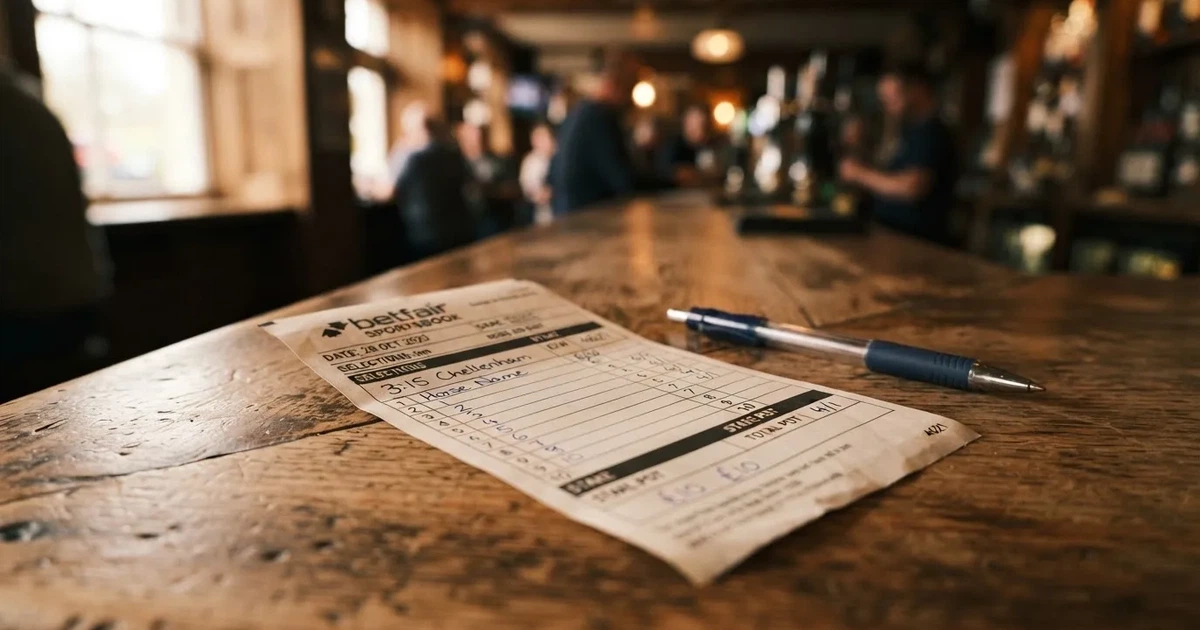
The word “exchange” sits next to the word “bookmaker” on dozens of marketing pages, and the two businesses are not the same shape. A bookmaker quotes prices it is willing to back out of its own pocket; an exchange is a venue where customers stake against each other, and the operator’s cut is commission on net winnings. That single difference decides everything that follows — what odds look like, who carries the liability, how a market settles, what can go wrong and where the protection sits. Reading a betting exchange through bookmaker-shaped assumptions is the quickest way to misread one.
This page is built around that gap. It starts with the responsible-gambling frame that any punters using real money should see first, then walks through the rules specific to exchanges, the way crypto and anonymity fit (or do not) into a Great Britain–licensed model, the bonus mechanics that turn a sign-up headline into something specific, the app experience, live betting and cash out, the strategies that work better on an exchange than at a bookie, the bet types and odds formats, and finally the ten licensed brands this guide covers. The closing block turns to the legal frame and answers the questions readers tend to come back with.
Responsible Gambling Around a Betting Exchange
A betting exchange is a venue where customers bet against each other. That brings the punter into a position that has no direct parallel on the high street — the “layer” stands in for the bookmaker, and a liability can run well past the stake. A backer’s loss is capped at the stake they put down; a layer can owe more.
Layer of liability does not disappear because the venue is licensed. Gamblers Anonymous UK, the National Gambling Helpline run by GamCare and the NHS clinics that specialise in gambling harm are the three routes every licensed remote operator in Great Britain points customers towards. The Pals (peer support), GamCare’s chat service and the self-exclusion register GAMSTOP are the practical levers a bettor can pull before harm lands.
Protection that has to be set up before harm lands:
- GAMSTOP — a multi-operator online self-exclusion scheme. From 31 March 2020 every online operator licensed in Great Britain has to be part of it. Minimum exclusion periods run six months, one year, five years, or five years with auto-renewal. Once it starts, the exclusion holds for seven years past the chosen period unless the customer lifts it themselves.
- Deposit limits — every licensed operator must offer a gross deposit limit set by the customer, and a recent rule change has rolled this out in two phases, the first of which already applies.
- Financial vulnerability check — once a customer’s net deposits across rolling 30 days push past £150, the operator runs a public-record check. It is not a credit check or an income check, but it does mark a soft ceiling.
- Identity verification before the first deposit — since 7 May 2019, a customer cannot place a bet, claim a bonus or fund an account without name, address and date-of-birth checks. Anonymity is not the default at any licensed site.
A practical note that fits here. Where a lay bet is the trade, the figure on the bet slip labelled “liability” is what the layer can lose if the outcome goes the worst way. That number can be larger than the bank balance that funded the back bet behind it. Treat the slip on a lay with the same seriousness a bookmaker would treat any liability over your betting budget.
Crypto, Anonymity and the UK Rule
“Best bitcoin betting exchange” and its sibling searches sit inside this topic because crypto-funded books do exist offshore and because an exchange, by construction, does not hold the bets itself. The licensed answer in Great Britain is simpler and stricter.

Since the Gambling (Licensing and Advertising) Act 2014, any operator whose remote facilities are used in Great Britain needs a Gambling Commission licence, wherever the company is based. A Curaçao, Maltese or Gibraltar licence is not a substitute. The licensed exchanges in the comparison block below — Betfair, Smarkets, Matchbook and the like — hold GB remote licences against this rule. They use fiat rails and verify the customer before the first deposit.
That leaves three honest framings and one dishonest one. A licensed site is verified before the first bet, accepts name and date of birth, and is part of GAMSTOP; deposits are settled in pounds and run through mainstream processors. A site that takes bitcoin only and asks for nothing but an email is, in this jurisdiction, an unlicensed site, and what a customer gives up by using it is concrete: no GAMSTOP coverage, no Commission complaints route, no approved dispute-resolution body, and no British consumer redress if funds are withheld. That is the loss to weigh against the convenience.
“Betting exchange bitcoin” remains a real search because the words pair. The honest read of the pair is that a licensed exchange is not a venue for pseudonymous play, and a venue for pseudonymous play is, by the same logic, not a licensed exchange. Crypto can still flow from bank to operator in some configurations, but a licensed site will still run the verification step that the operator’s licence requires.
Bonuses, Free Bets and the Maths Behind a Sign-Up Headline
A betting exchange rarely matches a traditional sportsbook’s sign-up headline, and the reason is the same as the one earlier: an exchange’s revenue is commission on net winnings, so the marketing budget is calibrated for a different pitch. A punters comparing the two shapes finds that:
- Welcome offers lean small and specific. A “bet £5, get £25 in free bets” frame is common because it is specific to that operator’s terms.
- Free-bet stake is not paid back. A £10 free bet at 3.0 pays £20 of profit, not £30. The stake is the operator’s cost.
- Wagering rules are tighter than a casino bonus. Since 19 January 2026, wagering requirements on bonuses at licensed sites are capped at 10x — a £10 bonus at 50x wagering was £500 of bets before, and the cap removes the more punishing forms.
- Mixed-product offers are out. A “bet on football to get free spins” cross-promo is banned. The product the bonus clears on is the product you must bet.
A worked example for the typical welcome frame. A “bet £5, get £25 in free bets” headline carries three numbers that decide what it is worth: a £5 qualifying stake, a £25 free-bet bundle, and a 14-day window. The qualifying stake has to be at minimum price 2.0 (1/1) for the free bet to unlock. Once unlocked, the £25 is a free bet whose stake is not paid back. A winning free bet at 3.0 pays back £50 of profit — £25 × (3.0 − 1) — rather than £75. That is the marketing word “free” meeting the arithmetic.
A second worked example for what the marketing copy calls a “deposit match”. Midnite’s standard sports welcome is the £5-qualifier frame; a brand running a “100% back as a free bet up to £50” frame, such as BetTom, doubles the qualifying bet in free-bet value. Either way the rule is identical — the free-bet stake is not returned on a winner — and the size of the headline number reflects how much qualifying stake the operator is willing to back, not what the customer walks away with after a winning bet.
The discipline to keep is reading the small print on three points before any bonus is claimed: minimum price (sometimes written as “EVS” or “1/1”, i.e. decimal 2.0), expiry window (often seven or fourteen days), and any cap on free-bet winnings. Where the small print says “free bet returns exclude stake”, that is the rule every “free” headline on a betting exchange shares with a sportsbook.
Apps and Mobile Access
A betting exchange is intrinsically a multi-screen activity — the bettor lays while backing on another leg, watches a price ladder, and reacts to in-play ticks. That is an awkward fit for a phone, and it explains why the apps differ from sportsbook apps in three structural ways.
First, depth of market. An exchange’s value is partly the depth of the book behind each market, and the apps handle this differently. Matchbook and Smarkets lean on price ladders that scroll vertically, with the best back and lay prices at the top, and a one-tap stake box for placing the bet. Betfair’s app does the same with a longer history of refinement but the same fundamental layout. A bookmaker’s app has prices but does not have to show what is waiting to back the other side; an exchange has to.
Second, latency. In-play betting on an exchange is a momentum trade, and a half-second delay can turn a placed lay into an unmatched liability. The licensed apps in this guide run on their own servers without a separate exchange clearing house, which keeps round-trip times low.
Third, the breadth of markets. A bookmaker’s app usually opens with a sport-by-sport grid; an exchange’s app usually opens with the markets on a chosen event, plus a search box for runners and teams. Sportsbook apps of large operators carry thousands of markets per football match; exchange apps of the same match typically carry hundreds, because the venue has to wait for opposing liquidity before a market fully forms.
The gestures are familiar. A sportsbook “bet builder” or “same-game multi” sits one tap away on a sportsbook app; an exchange lets the customer assemble the same multi manually across legs, with the back and lay logic explained in the section on bet types.
Live Betting and Cash Out on an Exchange
Live betting works on an exchange just as it does at a bookmaker, with one structural difference. A bookmaker takes the position itself, so when a goal goes in, the book moves its price to manage liability. An exchange lets customers move against each other, so a goal often drops the lay price sharply as backers rush to lay the new favourite.
Cash out is where the comparison sharpens. A sportsbook cash-out is an offer from the operator, a derived price calculated on the spot from the book and the customer’s stake. An exchange has no analogue in the strict sense; the bettor closes the position themselves by taking the current back or lay price against their original bet. Some licensed apps — Betfair Sportsbook, DAZN Bet, Midnite — do offer a one-tap cash-out as a feature layered on the exchange model. Where cash out is offered, the operator’s own terms usually note that availability is not guaranteed and that bets stand if it is not.
Live streaming is a third leg in the live-betting triangle. Betfair Sportsbook’s app streams selected UK and Irish horse racing and football in play; Matchbook streams horse racing and greyhounds; Smarkets and Betfair’s exchange side cover the same sports but at varying depth. Streaming is a value-add built on rights deals with the sports; it is not a basic feature tied to the licence.
A practical read for a punter: an exchange’s in-play is sharper than a bookmaker’s in-play if the customer wants to trade rather than back. It is slower if the customer just wants a one-tap in-play punt, because the price ladder needs a second tap to set the stake.
Strategy and Systems on an Exchange
The strategies published under “betting exchange system” and “betting exchange strategy” do not always translate at a bookmaker. Three approaches are genuinely shaped by the venue:
- Laying favourites — betting against the favourite to win. Done well, this catches the way short-priced horses and football favourites underperform in the betting market. Done badly, it is a stake-loss that runs quickly if the favourite obliges.
- Trading the price — backing at one price and laying at a higher price on the same selection before the off, capturing the spread without taking a position on the outcome. This is the model for in-play trading and for scalping a slow market.
- Dutch matching — backing every outcome of a three-way market such as 1X2 at odds that, commission included, lock in a small profit. The exchange makes this calculation only just feasible in tight markets such as outright tennis.
A betting exchange laying system, sensibly constructed, treats liability as a fixed budget. The layer never puts up more than they can stomach losing. The strategies that look clever on social media are mostly failed experiments from people who did not.
The arithmetic behind a “free” bonus, applied to a strategy that’s framed around a sign-up offer:
- A free bet of £25 with a minimum price of 1.5 (1/2) at decimal odds 2.5 — used on a single event.
- The free bet’s stake is not returned. The free-bet profit is £25 × (2.5 − 1) = £37.50.
- Multiply by the market’s payout share — say, 0.95 on a typical two-outcome market — to get the expected profit on a sharp-odds bet.
- Drop the stake retention, drop the commission, and the value of that £25 free bet on average over many bets is £25 × (odds − 1) ÷ odds × payout share. The result varies with odds; at 2.5 it is roughly £25 × 1.5 ÷ 2.5 × 0.95 = £14.25.
Two clarifications follow. One: that is an average, not a guaranteed return on any single bet. Two: at higher odds the per-bet expected value rises, but the win probability drops, so the net expected cost of clearing the bonus does not.
Bet Types, Markets and Odds on an Exchange
A betting exchange and a bookmaker offer overlapping bet types but at different prices. The starting frame is the decimal odds format used in this jurisdiction, where 6.00 means a £1 stake pays £6 (a £5 profit on a £1 stake). Fractional odds do the same thing in different clothes: 5/1 means a £1 stake pays £5 profit plus the £1 stake back; the conversion is fractional ÷ 100 + 1 ÷ (fractional ÷ 100) = decimal. 5/1 → 5 ÷ 1 + 1 = 6.00.
The most common Bet Tom bet types on an exchange break down into:
- Back bet — a stake that the selection wins. Profit = stake × (decimal odds − 1). Return = stake × decimal odds.
- Lay bet — a stake against the selection winning. Liability = stake × (decimal odds − 1) minus the lay stake. Return if the selection loses = the backer’s stake.
- Single — one bet, one selection. Pays out if the selection wins.
- Accumulator (“acca”) — multiple selections where all have to win; the odds multiply but so does the loss if any leg fails. Betfair Sportsbook and Matchbook both run Bet Builder products for same-game multis.
- Each-way — two bets of equal stake: one back bet on the win, one on the place. Useful in horse racing where place terms vary by race type and operator.
- Cash Out — settle a back or lay before the outcome, locking in profit or limiting loss at the current price. Where the operator offers a one-tap cash-out, bets usually stand if cash-out is not available.
The Bet Tom example settles as follows:
- A £10 single at decimal odds 3.0 returns £30. Profit = £10 × (3.0 − 1) = £20. Return = stake × odds.
- A £10 accumulator at combined decimal odds 6.0 returns £60 if every leg wins. Profit = £10 × (6.0 − 1) = £50.
- An each-way bet is two £10 stakes on a 10/1 horse at 1/4 odds for a place in a five-runner race: it costs £20 in stake; the win part pays £100 profit at 10/1; the place part pays a quarter of the win odds, so 2.5/1, paying £25 profit. Total £125 profit on a £20 stake if it wins.
An exchange typically caps odds at 1.01 to 1000 and lets bet sizes rise as far as opposing customers match the stake. The mathematical reason an exchange’s prices are usually better than a bookmaker’s: the bookmaker’s spread has to cover its own liability, while an exchange’s spread has to be no wider than competing liquidity. The bettor pays commission on net winnings instead of margin baked into every price.
Where the Market Margin Sits in the Odds
The “bookmaker’s margin” is the chunk of every pound staked that the operator keeps, on average, across a market. A market where the bookmaker’s prices add up to 105% over round (i.e. the implied probabilities sum to 105%) carries a 5% margin. A market where they sum to 102% carries a 2% margin. An exchange’s market typically runs tighter, because two-way trades with no operator liability do not need a fat spread.
The margin worked through a sample:
- A two-way market at decimal odds 1.90 / 1.90 — an illustrative example, not a real price.
- Implied probability of each side = 1 ÷ 1.90 ≈ 0.5263.
- Sum of implied probabilities = 2 × 0.5263 = 1.0526, i.e. 105.26%.
- The market’s payout share is 1 ÷ 1.0526 ≈ 0.95, or 95%.
- Margin = 1 − 0.95 = 0.05, or roughly 5%.
A band follows. Markets on a betting exchange, on a tight two-outcome event, tend to run between 95% and 98% payout share, which means a 2% to 5% margin — a slimmer margin than the 5% to 10% typical of a bookmaker. The licit conclusion is the right one: the betting exchange offers the price that the market is willing to back, and that price is usually sharper than a bookmaker’s price, at the cost of liquidity drying up on obscure events.
Where the band comes with a condition: the figure assumes the bet is placed at the best available price and that the bet wins. A bet at the second or third row of the price ladder — where the bettor paid a worse price to get matched — has a larger implicit margin. A bet that loses pays nothing at all, and the operator keeps the stake.
How an Operator Compares
The list below is the comparison the licensed, ranked set above. Betfair first; Spreadex’s spread-betting licence sits outside an exchange, so it is not in the comparison; Smarkets, Matchbook, the rest in order.
| Brand | Gambling Commission licence | Status on this page |
|---|---|---|
| Betfair | 039439-R-319330-013 (account 39439); holder PPB Counterparty Services Limited; categories include remote general betting standard (real events). Exchange run as listings-only on Wikipedia and the brand’s own terms. | Licensed exchange. |
| Smarkets | 039173-R-319366-011 (account 39173); holder Smarkets (Malta) Limited; category remote betting intermediary. Standard 2% commission on eligible exchange bets. | Licensed exchange. |
| Matchbook | 039504-R-319407-024 (account 39504); holder Triplebet Limited; categories remote general betting standard (real events) and remote betting intermediary. Bet Builder, multiples, in-play, horse racing and greyhound streaming. | Licensed exchange. |
| Kalooki Sportsbook | 057730-R-333396-005 (account 57730); holder Kalooki Sportsbook Limited; category remote general betting standard (real events). GAMSTOP member. | Licensed sportsbook. |
| BetTom | 064959-R-339314-003 (account 64959); holder Bet Tom Limited; category remote general betting standard (real events). Sports welcome 50% back as a free bet up to £50, paired with 50% as free slot funds up to £50. | Licensed sportsbook. |
| DAZN Bet | 048756-R-327274-019 (account 48756); holder DZBT Limited; category remote general betting standard (real events). Cash Out availability is not guaranteed. | Licensed sportsbook. |
| Midnite | 101839-R-342850-001 (account 101839); holder Midnite Limited; category remote general betting standard (real events). In-play events, acca builder, popular accas, price boosts with max-stake limits. | Licensed sportsbook. |
| Star Sports | 009177-R-104555-019 (account 9177); holder Star Racing Limited; category remote general betting standard (real events). Bet Boosts, Daily Specials, Weekend Enhanced Boosts. | Licensed sportsbook. |
| Fafabet | 057385-R-333191-006 (account 57385); holder Taichi Tech Limited; category remote general betting standard (real events). Best Odds Guaranteed on UK and Irish horse racing from 9am on race days. | Licensed sportsbook. |
| Bet600 | 044731-R-323941-016 (account 44731); holder Tyche Tech Limited; category remote general betting standard (real events). Best Odds Guaranteed on horse racing at SP. | Licensed sportsbook. |
Two clusters sit inside this list. Betfair, Smarkets and Matchbook are the three licensed exchanges on the list, all holding the betting intermediary category. The remaining seven are licensed sportsbooks; several — Betfair Sportsbook, Midnite, DAZN Bet — carry in-play and Bet Builder features alongside their exchange or as their main product. The covered set is not the whole market, and a brand not in the list is not by that token unlicensed; the page presents the operators the comparison is built on, plus the others research surfaces with comparable credentials.
How an Exchange Actually Works
A betting exchange is a marketplace where customers bet against each other on the outcome of discrete events. The exchange itself is not a party to the bets. Where a bookmaker would quote a price it is willing to back, an exchange posts every customer’s price and matches them in real time. The oldest licensed exchange in this jurisdiction, Betfair, ran on that model from 2001, when it merged with Flutter (Flutter itself wound down in January 2002). The mechanic has not changed.
The customer controls two directions of bet: a back bet, which wagers that an outcome will occur, and a lay bet, which wagers that it will not. The layer takes the role a bookmaker would normally play, and the figure on the slip called “liability” is the most that layer can lose in the worst case. Most exchanges charge commission as a percentage of a customer’s net winnings per market; losing bets incur no commission. Odds generally run between 1.01 and 1000 decimal, and bet sizes are not restricted beyond what opposing customers can match.
Three concrete differences meet a punter on first use. One, the price ladder: most exchanges show the best three to five back and lay prices, with the size available at each one. Two, the liquidity: an obscure market might have only £50 of liquidity on either side, so a bigger stake gets part-matched, and the bettor holds an “unmatched” portion that might never get filled. Three, the matching engine: orders on an exchange can sit “on the book” and wait to be matched, or be cancelled mid-flight if the price moves against the bettor’s view.
A worked example carries the lesson. A back bet on a football home win at decimal odds 2.50 for a £10 stake returns £25 (£15 profit) if the home team wins, and returns £0 if it does not. A lay bet on the same selection at decimal odds 2.50 for a £10 stake (a £15 liability) returns the £10 stake if the home team does not win, and £0 if it does; the layer’s loss is the £15 liability.
How the Regulation Defines an Exchange
The Gambling Commission licenses a market under the Gambling Act 2005. The relevant category for betting exchanges is the remote betting intermediary category, which sits inside the broader remote licence classes alongside remote general betting standard (real events), remote general betting standard (virtual events), remote general betting limited, and remote pool betting. Two things follow.
First, the exchange’s licence is its licence. A brand not listed under the remote betting intermediary category is, by definition, not running an exchange in the way this guide defines one. Betfair, Smarkets and Matchbook carry that category; the rest of this page’s reviewed list carry remote general betting standard (real events) only and run their product as sportsbooks.
Second, the Commission’s public register can be searched by business name, trading name, domain or account number. The register is the test of who holds a licence. Licensed operators use both .com and .co.uk domains, so the domain proves nothing. The Gambling Act 2005 covers Great Britain (England, Scotland and Wales); Northern Ireland sits outside the Act and has its own older law.
Beyond the licence category, three rules shape how the licensed exchanges in the comparison handle a bettor:
- Identity verification before the first deposit. Punters cannot fund an account without name, address and date-of-birth checks since 7 May 2019. Free bets and bonuses are covered by the same rule.
- Credit cards banned for gambling. Since 14 April 2020, no credit-card-funded payment can fund a gambling account, including credit-card-funded payments through an e-wallet. Debit cards and bank-based payments sit outside the ban.
- General Betting Duty is the operator’s tax, currently 15% on the operator’s gross profits, with a 25% remote rate scheduled from 1 April 2027. The customer pays no tax on betting winnings in Great Britain.
A second layer of protection is the operator’s own licences and codes of practice. Licence Conditions and Codes of Practice (LCCP) hold the social responsibility code, the money-laundering rules, the new “10x” bonus cap, and the financial vulnerability check on net deposits over £150 across rolling 30 days. The Commission’s 7 July 2026 statement on financial risk assessments sets out an unstaged framework without a published start date.
A Strategy in Concrete Numbers
A worked scenario applies the betting exchange trading strategy to a live-football market:
- Pre-match odds: decimal 2.10 on the home win (back).
- The punter backs the home side at 2.10 for £100. Liability if a goal goes in early is £0, but the implied win probability at 2.10 is just under 48%, so the punter’s view is that the home side is at 2.20 of true value at kick-off.
- The home side concedes early. The lay price collapses from 2.10 to 1.7 within a minute.
- The punter lays the home side at 1.7 for £100 at the new price. Liability of the lay is £100 × (1.7 − 1) = £70.
If the match ends as expected (no further goals), the punter’s losses are: −£100 stake on the original back if the home side loses, plus £100 stake retained on the lay (because the home side did not win). Net result on a winning trade: the punter captures the difference between the two laid odds — if the match ends 0-0, the punter’s back loses £100, the lay stake returns £100, net 0, but on a different outcome (home side scoring earlier) the punter’s back wins £210, the lay loses £70, net £140.
A “no goal scored” outcome is the worst case on this trade — the punter’s lay wins, but the back loses. The trade’s edge is the punter’s view that the lay at 1.7 was overpriced given the current state of the match. The bet carries no certainty; it carries the punter’s view.
Checking a Bookmaker’s Licence
The Gambling Commission’s public register is at the address operators and customers use to check licences. The simplest checks:
- Search by business name. The result list shows the licence category, the licence holder’s registered name, and the start/renewal dates.
- Search by domain. A brand can hold one licence against several domains; the result is the canonical test.
- Search by account number. The number is printed on every licensed operator’s UK site, usually in the small print.
A licensed operator’s UK app usually states the Gambling Commission account number on its app store page or in the footer of its own site. Betfair runs on Commission account 39439; Smarkets on 39173; Matchbook on 39504. The figure on its own proves nothing; the test is the register entry under it.
A negative result on the register is dispositive. A brand not on the public register for a remote licence against Great Britain is, at the date of the search, unlicensed for that jurisdiction. The legal consequence is set out in the section on offshore sites.
The Legal Frame in Great Britain
The legal frame is short by design, because the heavy lifting sits with the Commission. Three points matter for the punter:
- Betting exchanges are licensed by category. The remote betting intermediary category carries its own rules; the moment a brand steps outside that category and runs as a fixed-odds bookmaker, the comparison shifts.
- The customer’s protection is the licence’s promise. GAMSTOP coverage, the 10x bonus cap, the £150 vulnerability check, and the identity-verification rule are all attached to the licence, not to a brand’s voluntary policy. The loss of the licence is the loss of those protections, which is what an unlicensed site forfeits.
- Offshore is illegal for the operator, not the customer. Section 33 of the Gambling Act 2005 makes providing gambling facilities in Great Britain without the required licence an offence. There is no offence aimed at a customer who bets on an unlicensed site, but the customer gives up the protections a licensed site offers.
The Commission’s enforcement powers are mostly disruption-style: cease-and-desist notices, search-engine referrals, registrar and host cooperation, payment-provider action. Court-ordered DNS blocking powers have been granted or are about to be; ISP-level blocking is not in operation at the time of writing. The Commission’s statutory levy is a separate charge on operators, not a tax on customers.
Betfair, the Standout Licensed Exchange
The exchange started in 2001, when Flutter merged with Betfair; Betfair was chosen as the primary platform, and Flutter was wound down early in 2002. Today’s Betfair is part of Flutter Entertainment and trades on the Commission’s register under PPB Counterparty Services Limited. The brand holds remote general betting standard (real events) on its sportsbook and runs the betting exchange on the same licence group. The Commission’s account is 39439.
The product relevant to this page is the exchange: the back and lay markets, the in-play offering, Bet Builder, free live streaming of UK and Irish horse racing and football in the app, and the 90 Minute Payout market that settles on the result of the match proper, irrespective of extra time. The same brand’s sportsbook is a separate product under the same group licence.
The verdict for the Betfair review. The depth of market on the bigger football and horse racing events is what other licensed exchanges benchmark against, and the sportsbook’s free live streaming of UK and Irish racing is a consistent edge. The cost is comparable to the rest of the licensed exchanges, with commission rates that vary by sport and customer type. The punter who trades in-play on football, who lays favourites pre-race on the bigger meetings, and who wants the streaming plus Bet Builder in one app will find a deeper product here than anywhere else on the list.
Smarkets, the Tight Margin Specialist
Smarkets is licensed under Smarkets (Malta) Limited on Commission account 39173, with the remote betting intermediary category and a standard 2% commission rate on eligible exchange bets. The App Store listing confirms the offer: new customers have been given 0% commission for 60 days against a £10 first deposit. The standard rate of 2% on net winnings is on the lower end of what licensed exchanges in this jurisdiction charge, and the marketing message is the corresponding “best odds” claim.
The verdict for the Smarkets review. The headline rate of 2% on a market with a tight price ladder gives the punter a sharper net return on a winning trade than several licensed exchanges. The 0% commission offer for new customers is the largest in this list and shapes the comparison for new accounts. The depth of market is thinnest of the three licensed exchanges on the rare horse racing event, which is where the brand loses ground to Betfair and Matchbook; the volume on the bigger football events is competitive.
Matchbook, the Sharp Multiple-Market Exchange
Matchbook is licensed under Triplebet Limited on Commission account 39504, with both remote general betting standard (real events) and remote betting intermediary on the register. The app-store listing confirms the offer: Bet Builder, multiples, in-play betting and live streaming of horse racing and greyhounds. The product is an exchange with a sportsbook layer; the same brand runs multiple markets and the same kinds of advanced features a sportsbook would offer.
The verdict for the Matchbook review. The combination of Bet Builder and multiples on the same account, with the exchange’s standard back and lay pricing, is unusual at a licensed betting intermediary. The live streaming of horse racing and greyhounds covers more niche sports than some sportsbooks on the list. The relative weakness is the lower limit of in-play markets compared to a sportsbook-only brand with a market-maker position.
Kalooki Sportsbook, a Sportsbook with a Listing
Kalooki Sportsbook is operated by Kalooki Sports Book Ltd (company number 12938274) and licensed under Commission account 57730. The brand is a sportsbook, not a licensed exchange; the remote general betting standard (real events) category is on the register. The brand is a GAMSTOP member, which is the mandatory baseline for any licensed operator’s online product, and the operator has to verify identity before the first deposit.
The verdict for the Kalooki Sportsbook review. The brand’s surface area is sportsbook, which sits inside the licensing scope of the Commission’s general betting standard category rather than the betting intermediary category. The review’s role is to give the punter a benchmark for the sportsbook comparison: Betfair Sportsbook, Midnite, DAZN Bet, Star Sports, Fafabet and Bet600 all sit under the same category.
Midnite, the App-First Sportsbook
Midnite runs on Commission account 101839, licensed under Midnite Limited, in the remote general betting standard (real events) category. The app-store listing cites in-play events, an acca builder, popular accas, price boosts and maximum-stake limits. The sports welcome offer is the £5-qualifier-at-minimum-price-2.0 frame: back a £5 qualifying bet within 14 days and receive £25 in free bets plus 50 free spins, with the free bet valid for 7 days.
The verdict for the Midnite review. The acca builder and the popular accas are a sportsbook feature set the licensed exchanges on the list do not carry; the price boosts with maximum-stake limits show that the operator, like every sportsbook, sets its own ceiling on how much can be staked at the boosted price. The 7-day validity on the free bets is shorter than the 14-day qualifying window and shapes what the welcome offer is worth for a punter who only checks the app once a week.
BetTom, the Joined-Up Welcome Frame
BetTom is licensed under Commission account 64959, held by Bet Tom Limited, and operates general betting facilities for real events. The sports welcome offer is the matched-pair frame: 50% back as a free bet of up to £50, paired with 50% back as free slot funds of up to £50 for casino play. The terms bind the offer to the brand’s own small print. The promotional frame is explicitly a mixed-product offer — sportsbook and casino on the same account — which a brand in this jurisdiction can still run because the terms bind the casino offer to a separately licensed casino product, with cross-promotion rules applied per product.
The verdict for the BetTom review. The paired welcome offer does what a sportsbook welcome typically does in one product, two products, three products. The “free bet” wording is honest because the free bet’s stake is not paid back; the “free slot funds” wording usually means a casino bonus that is locked until wagering requirements are met, separate from the sportsbook bonus. The punter should treat the matched-pair as two separate bonuses and read each set of small print separately.
DAZN Bet, the Streaming-Anchored Sportsbook
DAZN Bet is licensed under DZBT Limited on Commission account 48756, in the remote general betting standard (real events) category. The product set on the help pages includes Cash Out, Bet Builder, daily bet boosts and in-play betting. The cash-out help page is explicit: cash-out availability is not guaranteed, and bets stand if cash-out is unavailable. The bet boosts run daily; the in-play betting covers the standard football, tennis and US sports lines.
The verdict for the DAZN Bet review. The streaming tie-in with DAZN’s sports platform is the surface difference for a DAZN subscriber — the same account works across betting and streaming — and the daily price boosts add a consistent edge on selected markets. The cash-out disclaimer is the operative line for a punter who plans to use cash-out as a strategy; it is the same line on most sportsbooks, but the operator’s help page sets it out plainly.
Star Sports, the UK-Focused Sportsbook
Star Sports is licensed under Star Racing Limited on Commission account 9177, with a licence for remote general betting on real sporting events. The app-store listing describes pre-event and in-play markets with Bet Boosts, Daily Specials and Weekend Enhanced Boosts, plus in-play betting on football, horse racing, golf and US sports. The product is a UK-licensed sportsbook with no specific remote betting intermediary category.
The verdict for the Star Sports review. The Daily Specials and Weekend Enhanced Boosts are a UK-racing-shaped sportsbook; the operator’s racing heritage is the differentiator. The set of in-play sports is narrower than DAZN Bet’s, which is the relative weakness against the streaming-anchored sportsbook on the list. For a punter who bets mostly on UK horse racing and football, Star Sports is competitive; for in-play on US sports, it loses ground to the bigger sportsbooks.
Fafabet, the Best Odds Guaranteed Specialist
Fafabet is licensed under Taichi Tech Limited on Commission account 57385, in the remote general betting standard (real events) category. The brand runs Best Odds Guaranteed on UK and Irish horse racing win and each-way bets from 9am on race days: if the starting price (SP) is larger than the price taken at the time of the bet, the bet pays at SP. The product is a sportsbook with the racing-focused promotional frame.
The verdict for the Fafabet review. The Best Odds Guaranteed on UK and Irish racing from 9am is the headline feature, and it is the standard scope of the best BOG promotions in the jurisdiction. The punter who bets on UK and Irish racing and takes prices in the morning gets the better of the SP if the market moves against them. The product set narrows at football in-play against DAZN Bet or Betfair Sportsbook.
Bet600, the SP-Anchored Sportsbook
Bet600 operates under Tyche Tech Limited’s Gambling Commission account 44731, holding a licence for general betting on real events. The brand runs Best Odds Guaranteed on horse racing: if the SP is bigger than the early or show price, the bet pays at SP. The product is a sportsbook with an SP-anchored BOG; the racing-focused frame is the differentiator.
The verdict for the Bet600 review. The SP-anchored BOG is the headline. The narrower product set — horse racing with a sportsbook layer — is the comparative weakness against the multi-sport sportsbooks on the list. For a punter who bets mostly on UK and Irish racing and values the SP-anchored BOG, Bet600 is competitive; for a multi-sport punter, the brand’s relative narrowness shows.
Avenues That Did Not Make the Cut
The licensed set sits inside the ten operators in the comparison; the broader market sits outside it. A few brands sit adjacent to the topic, and the reasons they are not in the comparison:
- Spreadex is regulated by the FCA for spread betting and by the Gambling Commission for fixed-odds betting. Spread betting sits outside the exchange frame because the venue’s product is financial, not sports-event-shaped. The brand’s losses can exceed the deposit on the spread side, which is the FCA-shaped rule for financial spread betting.
- Unibet states it has operated since 1999; its UK site is run by Platinum Gaming Limited, Gibraltar, under Gambling Commission account 45322. The product is a sportsbook with the standard UK product set; the licensed sportsbook licence category is the Commission’s general standard. Unibet is not in the comparison because the set of ten sportsbooks/exchanges is fixed by the page’s research; a brand’s absence from the list is not a licence claim.
- Kwiff, Lottoland UK, Copybet, BetMGM UK and 10bet all sit on the Commission’s public register. They are licensed sportsbooks, and their details are in the brand’s own app store listing. None carries the betting intermediary category, so none operates as an exchange under this guidance.
A brand outside the licensed set is, by definition, not licensed. An unlicensed site is its own category of risk; the loss of protection was set out earlier and is not repeated here.
Putting the Page Together
A licensed betting exchange is a venue where the punter is the counterparty, and the operator’s cut is commission. A licensed sportsbook is a venue where the operator is the counterparty, and the operator’s cut is the margin baked into every price. Both shapes are licensed under the Gambling Commission; the difference between them sits in the category of licence (remote betting intermediary vs. remote general betting standard) and the consequence for the punter’s liability (liability is fixed by stake on a back, by lay stake times liability on a lay).
For a punter choosing between the licensed brands: the licensed exchanges on the list (Betfair, Smarkets, Matchbook) offer the venue for back-and-lay trading and a margin that is, on average, slimmer than a sportsbook’s. The licensed sportsbooks on the list (Kalooki Sportsbook, BetTom, DAZN Bet, Midnite, Star Sports, Fafabet, Bet600) offer the back-only product with a fat sign-up headline and the same protection as an exchange.
The list of ten names is the licensed set the page covers. The list is not the licensed set the Commission licenses; the Commission’s register has more entries, and the punters should check the register when they open an account. The page’s guidance is to look up the operator’s name or account number on the Commission’s public register, and to treat a register entry under the category “remote betting intermediary” or “remote general betting standard (real events)” as a licence.
The page is built around the responsible-gambling frame, the rules specific to exchanges, the crypto question, the bonus mechanics, the app experience, live betting and cash out, the strategies and systems that work better on an exchange than at a bookie, the bet types and odds formats, the comparison, the legal frame, and the FAQ. Each block has been written in light of the others; cross-references between them are by heading rather than by section number.
Frequently Asked Questions
How does a betting exchange work?
A betting exchange is a marketplace where customers bet against each other on the outcome of discrete events; the exchange itself is not a party to the bet. A customer can place a back bet (wagering that an outcome will happen) or a lay bet (wagering that it will not). The exchange matches opposing bets and charges a commission on net winnings for winning customers. The exchange’s odds are usually better than a bookmaker’s because the operator’s cut is commission, not margin.
How can it be checked that a bookmaker holds a Gambling Commission licence?
The Commission’s public register can be searched by business name, trading name, domain or account number, and is the whole test of who holds a licence. A licensed operator’s UK site usually states the account number in the footer; the register entry under that number confirms the licence category, the licence holder’s registered name and the brand’s domains. A negative result on the register is dispositive: a brand not on the public register is unlicensed in Great Britain.
How is the return on a bet worked out from the stake and the odds?
In decimal odds, the return is stake × odds. The profit is stake × (odds − 1). In fractional odds, the profit is stake × (fractional a/b). For a combination bet the odds of the legs multiply into one price. A free bet does not return the stake; the return on a winning free bet is stake × (odds − 1).
What is the bookmaker’s margin and how can it be seen in the odds?
The bookmaker’s margin is the share of every pound staked that the operator keeps, on average, across a market. It is calculated by adding up the implied probabilities of every outcome (1 divided by decimal odds for each one), taking 1 minus the sum’s reciprocal, and multiplying by 100. A market at decimal odds 1.90 / 1.90 has implied probabilities summing to 105.26%, a payout share of 95% and a margin of roughly 5%. Tighter markets run 2% to 5%; typical sportsbook markets run 5% to 10%.
How does a betting exchange’s “lay” bet work in plain English?
A lay bet is a wager against a selection. The layer takes the role a bookmaker normally plays, and the figure on the slip called “liability” is the most the layer can lose in the worst case. A lay bet wins if the selection loses; the layer’s stake is the backer’s stake on the other side of the matched pair. On a £10 lay at decimal odds 3.0, the layer’s liability is £20 (the £10 backer’s stake plus £10 profit), and the layer keeps the £10 backer’s stake if the selection loses. If the selection wins, the layer loses the £20 liability.
Betting sites & exchanges – Rugbytipsters.com
Content created by the «Rugbytipsters.com» team
