
Horse Betting Tipsters: How a Racing Tip Is Built, Bought and Bled Dry by Margin
 Available in US
Horse racing carries more weight with British punters than any other sport, and the search for someone who can call a winner runs deeper here than in most markets. A “tipster” is simply a person who tells you what to back. Whether that tip is worth anything — whether the price on offer is bigger than the horse’s real chance, whether the tipster has a record you can audit, whether the bookmaker’s own cut has already been taken out — is the question this page tries to answer, not with a winner’s name but with the arithmetic that decides whether a tip beats the odds in the long run.

The article is current as of October 30, 2026 and the licence and operator claims below were checked against the Gambling Commission’s public register, with operator pages consulted for offer terms, safer-gambling tools and live-betting features. A price or a margin is a snapshot, not a promise: by the time you read this, the lines will have moved.
What a Horse Racing Tipster Actually Does
A tipster sells a forecast. Form figures, going reports, draw bias at the course, trainer patterns, jockey bookings, sectional times from previous runs, pedigree and a dozen smaller signals — these are the bricks a racing tipster lays. The prediction that comes out the other side is short: a horse, a price, sometimes a stake. Everything between is supposed to be judgment, and most of it is hidden from the punter who pays for the tip or reads it free.
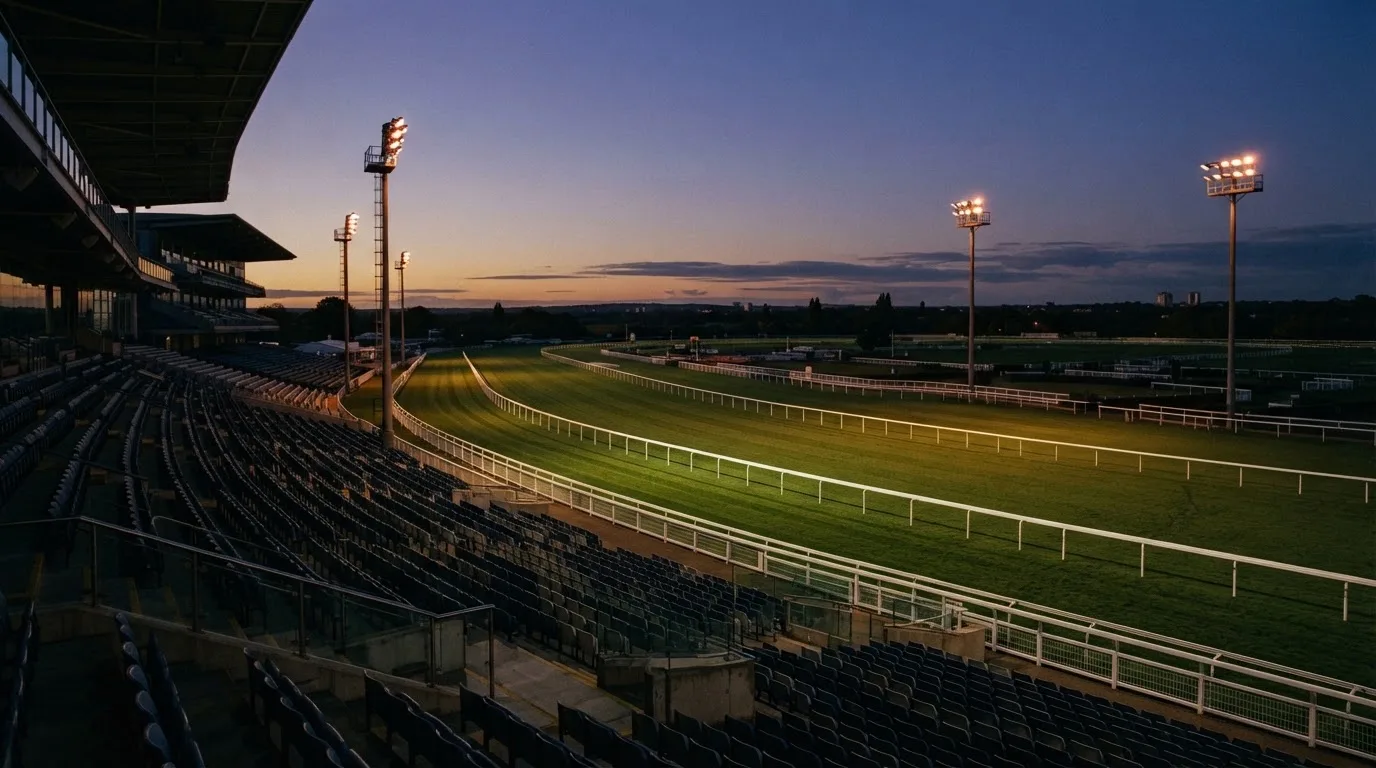
The word “tip” carries a quiet trap. A tip is not a forecast in the actuarial sense: a forecaster gives a probability, a tipster gives a name. The shift matters because a bookmaker’s price is, in part, an implicit probability, and a tip that names a horse at a long price can still be a loss-making bet. A 25/1 shot that wins one race in twenty-six is not a value bet just because it came home in front. The price is what you are paid when you are right and what you are out of pocket when you are wrong; the win is the easy part of the calculation.
Form is where every tipster starts, but form is not a single thing. Past results show where a horse has finished; sectional times show how fast it ran each furlong; ratings from organisations such as the BHA give a comparable figure across different tracks and conditions; the going — soft, good to soft, firm — and the draw at the course both bend the picture. A tipster who reads only finishing positions is reading the headlines. A tipster who reads sectionals, going changes and trainer intent is reading the race.
Flat racing and jump racing — what the British call National Hunt — are different sports run by the same industry. A flat horse runs on a level track between two points, typically five to twelve furlongs (1.0 to 2.4 km) at meetings across the summer; a jump horse runs over fences or hurdles in winter, usually over longer trips, with different form patterns and a higher rate of fallers and unseated riders. A tipster who jumps between the two without telling you is mixing two databases.
Three classes of race deserve a note. Handicaps assign each horse a different weight to carry based on its ability, so the field is supposed to finish closer together; conditions races give horses the same weight with allowances for younger horses and fillies. Handicaps are harder for the favourite and easier for the longshot, which is why the place part of an each-way bet pays out more often in a handicap than in a Group race. The 2000 Guineas, the Derby and the St Leger make up the British Triple Crown and draw tipsters from across the world.
Free Tipsters, Paid Tipsters, Matched Betting and the Real Difference
Free tipsters exist because tip is a marketing product, not a money product. A racing site gives away a daily nap and a next-best because the tip brings traffic; the traffic brings deposits; the deposits bring the bookmaker’s margin. The free tip is a loss leader in the strict sense: it loses money as a tip and earns it as advertising. Some free tipsters are very good; many are not; the only way to tell is to read the record over hundreds of tips, and most free services do not publish a verifiable one.

Paid tipsters charge a subscription — weekly, monthly, by meeting, by season — and promise a strike rate and a profit. Strike rate is the proportion of tips that win, stated alone, is nearly meaningless: a tipster who backs every favourite at short prices has a high strike rate and a small profit per winner. A tipster who backs longshots has a low strike rate and a fat profit per winner. The figure that matters is yield, the profit divided by total stakes staked, expressed as a percentage. A 10% yield from a tipster who tips once a day is genuinely good; a 30% yield sustained over a year is the territory where the auditor and the bookmaker both raise an eyebrow.
Matched betting is the third shape, and it is not really a tip at all. A matched bettor reads bookmaker offers — free bets, refunds, enhanced odds — and uses a betting exchange to lay the same outcome, locking in a small profit regardless of the result. No tip is involved. The matched bettor is not picking winners; the matched bettor is collecting sign-up bonuses, welcome offers and the like, and laying off the risk on the other side. Profit depends on the offers available and the discipline to take them only when the maths works.
The key word is audit. A tipster who publishes a full P&L (profit and loss), with each tip, the price taken, the stake and the result, can be checked. A tipster who publishes a strike rate and a “best bets” list cannot. The first type costs you trust and a little time. The second costs you your stake.
Are Horse Racing Tipsters Legal in Britain
Yes, with the small print that applies to anyone selling or giving advice on a regulated activity in Great Britain. The Gambling Act 2005 licenses the activity of accepting bets, not the activity of giving tips; a tipster does not need a Gambling Commission licence to publish selections, and the Commission does not regulate the quality of the forecast. A tipster who takes money for the service is selling information, not taking bets, and information is not licensed.
The bookmaker you place the bet with is a different matter. Any operator taking bets from customers in Great Britain must hold a Gambling Commission remote licence, and that has been true under the Gambling (Licensing and Advertising) Act 2014 regardless of where the operator is based. A Curaçao, Malta or Gibraltar licence is not a substitute. The Commission’s public register is the whole test of who holds one, and the search works by business name, trading name, domain or account number. Every brand reviewed below carries such a licence, with the account number beside the name.
Northern Ireland sits outside the 2005 Act, on older legislation; a Great Britain licence does not regulate betting there, and a Northern Ireland punter is on a different legal footing. The page is written for Great Britain, and where that matters, it says so.
What makes a tipster’s advice lawful is not a licence but the ordinary law of contract and the consumer-protection rules around misleading statements. A tipster who claims a 90% win rate with no record to back it is making a misrepresentation, not just a marketing puff. Theasa, the Advertising Standards Authority and, in extreme cases, the courts are the routes a punter has if a paid tip service turned out to be a fraud rather than a forecast.
The Responsible Gambling Frame Around a Tip
A tip is a prediction, and a prediction that costs money is gambling. The Commission licenses the activity; the punter still has to live with the result. The frame around any tip service in Britain is set by safer-gambling tools that every licensed operator must offer and that any tipster who also runs a book or a staking plan is expected to respect.
GAMSTOP is the multi-operator self-exclusion scheme that has been a mandatory licence condition for online operators since 31 March 2020. A punter who signs up is excluded from every GB-licensed online operator for the period chosen — six months, one year, five years, or five years with auto-renewal. After the minimum period, the exclusion stays in place for a further seven years unless the punter asks GAMSTOP to remove it. Online only; betting shops use a separate service. Anyone who has signed up and is reading this page in search of a way around the block is not going to find one at a licensed brand.
The Commission has tightened the player-protection frame in stages. A financial vulnerability check — a public-record check, not an income check and not a credit reference check — applies at a GB-licensed remote bookmaker when a customer’s deposits minus withdrawals cross £150 in a rolling 30 days. The threshold has applied since 28 February 2025. The Commission has also announced, in a staged plan published on 7 July 2026, further financial risk assessments — the so-called affordability checks of the press — with no start date set. The right phrase is “announced, staged, no start date”, not “in force”, because no start date has been set.
Deposit limits are a separate obligation. Operators must offer a gross deposit limit on a fixed time frame, with the first phase in force since 31 October 2025 and a second phase postponed to 30 September 2026. Whether the second phase is live by the time you read this needs a current look at the Commission’s site, and the page does not pretend to know.
GambleAware, GamCare, the National Gambling Helpline, NHS gambling clinics and Gamblers Anonymous are the routes for help when the tip has been the excuse. The reminder sits here once, and the page does not repeat it.
Live Betting and Cash Out on Horse Racing
A horse race is not a football match: the result lands in seconds and the price can move from 6/4 to 16/1 on the run to the line. In-play on horse racing is a thin market in the wider sense — fewer selections, fewer markets — but a real one. Most GB-licensed bookmakers offer in-play on the bigger meetings, with the same markets as pre-race: win, place, each-way, sometimes a forecast or a tricast.
Cash out is the second live-betting feature that matters on racing. The bookmaker offers to settle the bet before the race is over, at a price that reflects the live state of the market. A horse travelling well at the second-last fence, with the favourite beaten, can be cashed out for a profit; a horse pulled up at the fifth can be cashed out for a loss, but a smaller one than letting it run. The price the bookmaker shows is the bookmaker’s price, with the bookmaker’s margin still inside it, and a punter who cashes out on a winner has left a fraction of the winnings on the table by design.
Live tipsters — services that send a tip mid-race — are a niche category and a small one. The window is short and the price moves quickly; a tip that arrives as the stalls open is a different article from a tip that arrives three furlongs from home. Where live tipping overlaps with in-play betting, the audit problem gets harder: a tip at SP (starting price) is one thing; a tip taken at a live price five seconds later is another, and only the service of verified bets can tell.
How a Prediction Is Built: Form, Statistics, Bookmaker Odds and Value
Form is the visible history: finishing positions in past races, the class of those races, the going, the course, the distance, the jockey, the trainer. A horse that has run well twice at Ascot on soft going has form that points at Ascot on soft going; a horse that has run poorly twice at the same course on the same going has form that points elsewhere. Form is not destiny, but it is the first filter.
Statistics are form turned into a comparable figure. Sectional times break each race into furlong-by-furlong splits, so a horse that finished fourth but travelled like the winner for the first half-mile is no longer fourth in the analyst’s notes. Ratings from organisations such as the Racing Post and the BHA standardise horses across tracks and conditions, so a 100-rated horse is supposed to be a 100-rated horse anywhere. The drawback of ratings is that they are smoothed over many runs; the drawback of sectionals is that they exist only where they have been recorded.
Bookmaker odds are a third signal and the most misunderstood. A bookmaker’s price is not the horse’s probability. The price is the probability plus the bookmaker’s margin, and the margin is split across every runner in the race. The favourite at 3/1 is not 25% in the bookmaker’s view; the favourite is 25% minus a share of the margin. Six runners, each priced at roughly 4/1, look like a fair race; six runners each at 4/1 actually sum to more than 100% probability and prove that the bookmaker is taking a cut.
Value betting is the practice of backing a horse whose price is larger than its true probability once the margin is taken out. A horse at 6/1 (decimal 7.00) is fair value at a 14.3% chance; if the tipster’s model says the horse is a 20% chance, the difference is value. Value is the only thing a tipster can sell that survives arithmetic: a 25/1 winner picked at random is not a value bet because the skill went up in the price but not in the chance.
The margin is what stops most tips being value. A bookmaker who takes 30% overround on a six-runner race has moved every price by enough that a tipster has to be genuinely sharper than the market to find value. Most are not. The next section shows what the margin looks like in the numbers.
The Bookmaker’s Margin in the Odds — A Worked Example
Take a two-way market priced at 1.90 / 1.90 (fractional 9/10). Decimal odds of 1.90 imply a probability of 1 / 1.90, or 52.63% for each outcome. Two outcomes at 52.63% sum to 105.26%. The sum is over one hundred, and the excess is the overround: 5.26%. The payout share is 95.00%, which leaves a margin of 5.0%.
In plain English: out of every £100 staked on this market, £95 comes back to winning punters and £5 stays with the bookmaker over the long run. The £5 is not a fee and not a commission; it is the price of the bet, paid by the loser side. The same calculation on a three-way football match produces a margin between 5% and 8% on most pre-match prices; on horse racing, with more runners and thinner liquidity on smaller meetings, the margin often runs higher, particularly in place markets and each-way markets where the bookmaker is taking on two prices at once.
A margin is a band, not a number, because it moves with the market and with the bookmaker. The 1.90 / 1.90 example produces a 5.0% margin; a 1.85 / 1.95 will result in a slightly different figure; a 1.80 / 2.00 widens it further. The point is the shape, not the precise figure: a two-way market priced close to evens carries around 2-5% margin; a six-runner horse race priced at fractional prices around 5/1 each carries more than 20% margin. Every tip that beats the market has to beat the margin first.
A punter can read the margin without asking the bookmaker. Sum the implied probabilities across every runner; subtract 100%; the rest is the margin. A punter who reads the margin will look twice at a race where every runner is priced at 10/1 and ask why the favourite is the same price as the longest shot.
The Top 10 UK Horse Betting Brands Reviewed
The ten brands below hold a Gambling Commission remote licence for general betting on real events and are listed in the Commission’s public register. The order is not a ranking by quality; the table that follows lays out the licence number and licence holder for each, with what the operator’s own terms state on horse racing and tipster-relevant features. No brand is the only licensed one, and several of these brands operate under group licences that cover sister brands elsewhere on the register.
| Brand | Gambling Commission account and licence holder | What the operator’s own terms state |
|---|---|---|
| Geoff Banks | Account 54095; GB Sports Advisors Limited | Live in-play prices and ante-post prices on future events, with horse racing as a stated market |
| Star Sports | Account 9177; Star Racing Limited | Sportsbook, virtual sports, casino and live casino, with the operator describing itself as the UK’s leading independent bookmaker |
| Fitzdares | Account 400; Fitzdares Limited | Cash out, accumulators, Lucky 15s, specials and ante-post markets across horse racing, football, tennis, rugby, cricket, golf and American football, with in-play live odds |
| Octobet | Account 62545; Octopus Game Limited | Best Odds Guaranteed on UK and Irish horse racing, up to £150 per customer per race |
| Midnite | Account 101839; Midnite Limited | In-play events, an acca builder, popular accas and price boosts with maximum-stake limits |
| Dabble | Account 65677; Dabble Sports UK Ltd | A first-deposit welcome offer on minimum odds with a 7-day free bet expiry and the stake not returned |
| Fitzwilliam Sports | Account 48760; SBKI Limited | Phone and live chat with the office open 09:00 to 21:00, Monday to Sunday, with messenger replies generally within 90 seconds |
| VBet | Account 44662; SCGO Limited | Bet Builder, pre-match and in-play betting, live streaming and a live calendar with results and stats |
| London Bet | Account 66162; Thistle Bet Limited | Sports betting across football, tennis, horse racing, greyhounds, darts, golf, cricket, NFL, NBA, MLB and snooker, with Pragmatic Play casino slots and live in-play |
| Ladbrokes | Account 54743; LC International Limited | Odds boosts on horse and greyhound bets, Best Odds Guaranteed on UK and Irish horse races, in-play betting and Acca Boosts |
Every brand in the table is part of GAMSTOP and accepts the safer-gambling tools the Commission requires. Where a brand sits in the group structure — LC International covers Ladbrokes and Coral, for instance — the table does not repeat the connection; it sits behind the licence holder and the punter sees only the brand on the betting slip.
Geoff Banks
Geoff Banks runs under GB Sports Advisors Limited on Commission account 54095, with a remote general betting standard licence for real events. The brand’s app publishes ante-post prices on future events and live in-play prices, with horse racing as a stated market in the offering. The pitch is the independent bookmaker’s pitch — a smaller operation with named staff and a phone-based heritage carried into a digital product.
For a tipster user, the relevant feature is ante-post: a tip on the 2027 Champion Hurdle placed twelve months in advance is an ante-post bet and a different contract from a bet on the next race, with non-runner rules that can turn a winning tip into a losing one. Read the ante-post rules before staking on a long-range tip.
A sound choice for the racing purist who prefers a named bookmaker with a dedicated ante-post focus; the limited market depth is a fair trade for the specialist service.
Star Sports
Star Sports runs under Star Racing Limited on Commission account 9177. The brand describes itself as the UK’s leading independent bookmaker and combines a sportsbook with virtual sports, casino and live casino — a fuller product than the betting-only independents in this list. The remote licence is for general betting on real events; the additional products sit under separate licences.
For a tipster user, the broader product mix is two-edged. The bookmaker has more to cross-sell — a tip that lands a free bet on racing and a few casino spins afterwards — and more margin to manage against, because the cross-sell comes with wagering conditions. The casino and live casino also pull the brand towards the bonus rules the Commission capped at 10x in January 2026.
An independent operator that leads with its sportsbook credentials, though the casino extras dilute the betting-only focus punters might expect.
Fitzdares
Fitzdares runs under Fitzdares Limited on Commission account 400, one of the older accounts on the register. The app offers cash out, accumulators, Lucky 15s, specials and ante-post markets across horse racing, football, tennis, rugby, cricket, golf and American football, with in-play live odds across the listed sports. The product is built around a premium positioning rather than a budget one.
For a tipster user, the Lucky 15 and accumulator features matter. A Lucky 15 is 15 bets covering four selections in singles, doubles, trebles and a four-fold accumulator — a common shape for a tipster with four horses for the afternoon. The all-bets-on bonus many operators offer on a Lucky 15 is a different product from the standard each-way and should be checked separately.
The premium alternative for those who favour bespoke markets like Lucky 15s and accumulator specials; while the margin is slightly higher, the product richness justifies the premium.
Octobet
Octobet runs under Octopus Game Limited on Commission account 62545. The brand’s stated headline on horse racing is Best Odds Guaranteed on UK and Irish racing, up to £150 per customer per race. BOG pays the bigger of the price taken and the starting price; on a hot favourite that drifts on course, BOG turns a small win into a larger one; on a 10/1 winner that shortens, BOG does nothing because the price taken was already bigger.
For a tipster user, BOG is the single most valuable bookmaker feature on UK and Irish racing. A tip at 8/1 that wins at a starting price of 10/1 is paid at 10/1, and the extra 2/1 is real money that the punter would have lost on a non-BOG bookmaker. The £150-per-customer-per-race cap is the figure to know: BOG pays up to £150 of additional winnings per race, and a large stake on a hot favourite can exceed that cap.
Best for punters tracking UK and Irish favourites; the BOG offer is excellent, provided the £150-per-race cap is kept in mind.
Midnite
Midnite runs under Midnite Limited on Commission account 101839. The site shows in-play events, an acca builder, popular accas and price boosts with maximum-stake limits on the boost. The welcome offer for new customers is a £5-or-more qualifying bet at EVS (2.0) or greater, returning £25 in free bets and 50 free spins within 14 days, with 7 days on the free bets. The Commission licence and the safer-gambling tools are in place; identity verification is run before the first deposit.
For a tipster user, the acca builder and price-boost shape are the relevant features. An acca builder is a same-race or same-meeting accumulator built from a menu of markets; a price boost is an enhanced price on a specified selection, often with a maximum stake. Both are tools to amplify a tip, but both come with caps and conditions, and the boost’s maximum stake is the figure that decides whether the boost is worth taking.
A slick, modern option for acca builders who can navigate the small print on maximum stake limits; the in-play boost is the main appeal here.
Dabble
Dabble runs under Dabble Sports UK Ltd on Commission account 65677. The brand’s welcome offer for new customers is a first-deposit £10-for-£10 in free bets, with minimum odds, a 7-day expiry on the free bets and the stake not returned with a win. The product is built around a social feed of tipsters and a copy-the-tip mechanic that maps a tipster’s bet directly onto the punter’s slip.
For a tipster user, the social feed is the relevant feature. A copy-the-tip model shortens the gap between the tip and the bet, but it does not shorten the gap between the tip and the value, and the brand’s commission on the tipster is the figure that decides whether the service survives. The 7-day expiry and the non-returned stake are the two terms a copy-the-tip punter should check: a £10 free bet that expires in a week is a small advantage if the tipster tips once a day; it is a vanishing one if the tipster tips once a month.
The place for social-betting enthusiasts, though the value of the welcome offer depends entirely on how effectively the copy-the-tip feature is used.
Fitzwilliam Sports
Fitzwilliam Sports runs under SBKI Limited on Commission account 48760. The brand offers phone and live chat with the office open 09:00 to 21:00, Monday to Sunday, with messenger replies generally within 90 seconds. The product is a heritage independent bookmaker with a phone-led service model that has carried into a digital app.
For a tipster user, the phone service is the relevant feature. A live bet placed by phone on a 33/1 outsider fifteen minutes before the off is a different experience from a bet placed on a mobile app and is sometimes the only route at smaller meetings where the online book has suspended the price. The 90-second messenger reply is the figure to read carefully: “generally” is not “always”, and a hot favourite in a big race will test that figure.
A throwback to the heritage of phone betting that offers genuine human service, making it a powerful tool for finding prices on smaller race meetings.
VBet
VBet runs under SCGO Limited on Commission account 44662. The brand offers Bet Builder, pre-match and in-play betting, live streaming and a live calendar with results and stats. The product is built around a wider sport menu than the racing-led independents, with horse racing as one of several featured sports.
For a tipster user, the live streaming is the relevant feature on racing. Live streaming of UK and Irish racing is restricted: the bookmaker can show a race from a course where it has a streaming agreement, and many smaller meetings are not covered. A punter who tips in-play at a smaller meeting should check the live streaming calendar first; the racing is not necessarily there.
The verdict for a punter who tips across multiple sports and wants live streaming, a Bet Builder and an in-play calendar: a credible fit, with the racing streaming coverage the small print to check before staking on a live tip.
London Bet
London Bet runs under Thistle Bet Limited on Commission account 66162. The brand combines sports betting — football, tennis, horse racing, greyhounds, darts, golf, cricket, NFL, NBA, MLB and snooker — with Pragmatic Play casino slots and live in-play betting. The product is a wider one than a racing-led independent, with a casino bolted on.
For a tipster user, the racing is a stated sport but a less central one than on the racing-led brands. The combined casino is the cross-sell to be aware of: a punter who tips on racing and is offered casino spins as part of the welcome package is being cross-sold, and the wagering conditions on the casino side are the figure to read. The Commission’s 10x bonus cap and the mixed-product promotion ban that came into force in January 2026 are relevant here.
Better suited to the casual punter who wants a broad sports menu rather than a racing-specific platform, with the racing presence being secondary to the wider offering.
Ladbrokes
Ladbrokes runs under LC International Limited on Commission account 54743, which also covers sister brands elsewhere on the register. The product offers odds boosts on horse and greyhound bets, Best Odds Guaranteed on UK and Irish horse races, in-play betting and Acca Boosts. The LC International group is one of the larger operators on the British market.
For a tipster user, BOG and the Acca Boost are the relevant features. BOG has the same shape as on Octobet — pay the bigger of the price taken and the starting price — and on a bigger brand the cap and the small print can differ. The Acca Boost is an enhanced price on a specified accumulator, with a maximum stake and a maximum boost that the small print carries. The bigger brand also has wider liquidity on bigger meetings and a smaller book on smaller ones.
The verdict for a punter whose tips land on bigger meetings, who values BOG and Acca Boosts and is comfortable with a mainstream bookmaker rather than an independent: a strong fit, with the mainstream bookmaker’s wider liquidity on bigger meetings the differentiator.
Staking and Bankroll Discipline — The Other Half of a Tip
A tip that lands once in four at an average price of 4/1 is a profitable tip if the stakes are level; the same tip run at 5% of bankroll on a confidence-weighted scale is more profitable on the wins and less damaging on the losses. Staking is the half of the equation that a free tipster rarely explains and a paid tipster rarely delivers.
Level stakes means the same unit on every selection. A £10 unit on a 4/1 winner returns £50 and a £10 unit on a loser returns £0; the average over many bets is the average of those outcomes, and the punter wins if the average exceeds the stake. The discipline is to keep the stake level: no doubling up after a loser, no cutting the stake after a winner. The discipline is the edge.
Kelly staking means staking a fraction of the bankroll equal to the edge divided by the price minus one. A 15/1 tip that the punter rates at 8% chance has an edge of 8% minus 1/16, or 1.75%, and the Kelly fraction is 1.75% divided by 15, or 0.12% of bankroll. The mathematics is clean and the variance is large; a half-Kelly or quarter-Kelly stake cuts the variance at the cost of cutting the long-term return. Most professional staking plans are some form of Kelly, sized down.
Bankroll is the budget the punter sets aside for betting and does not refill from other pots. A bankroll of £500 with a £5 unit is a 1% stake; a bankroll of £500 with a £25 unit is a 5% stake; the second is the more aggressive position and the one that runs out faster on a bad run. The 1% level is the most common rule of thumb for tipster-following punters; the 5% level is the aggressive ceiling for confident tipsters and is not for a beginner.
Each-Way Betting, Place Terms and What the Bet Actually Costs
An each-way bet is two bets of equal stake: a win bet and a place bet. A £5 each-way bet costs £10 in total and pays on both the win and the place, with the place part paid at a fraction of the win odds. Each-way is the standard punt on a longer-priced horse because it gives two bites at the result: the horse can win and pay the win price, or it can finish in the place positions and pay the place price.
The place part is governed by place terms that vary by race and operator. In British racing, the typical each-way place terms are: handicaps with more than fifteen runners pay 1/4 odds for four places; twelve-to-fifteen-runner handicaps pay 1/4 for three places; other races with more than seven runners pay 1/5 for three places; five-to-seven-runner races pay 1/4 for two places; races with fewer than five runners pay win only. The operator can offer better terms than the standard; the operator cannot offer worse.
The payout matters because the place part is the smaller of the two payouts. A 10/1 horse at 1/4 place terms pays £25 in win profit on a £5 win bet and £11.25 in place profit on a £5 place bet — £36.25 in total profit on a £10 stake if it places but does not win. A £10 win-only bet on the same horse at 10/1 returns £0 on a place finish. The each-way bet is the safer position, and the safer position costs half the stake.
A £10 each-way bet on a 10/1 horse at 1/4 place terms with three places costs £20, returns £110 on the win part and £35 on the place part, £145 in total if it wins. The arithmetic is the win bet’s payout at full odds plus the place bet’s payout at 1/4 odds. The place part is paid even if the horse wins — the place payout is in addition to the win payout, not a replacement for it.
Free Bets, Welcome Offers and What the Small Print Really Costs
A welcome offer is the bookmaker’s first sales pitch, and the pitch is shaped like a number: £30 in free bets, £50 in bet credits, a £10 free bet for a £10 first deposit. The number is the headline; the small print is the cost. The Commission’s promotion rules since 19 January 2026 cap wagering requirements on bonuses at 10x; a £10 bonus with a 50x wagering requirement needs £500 of bets to clear, and the cap means no bonus needs more than £100 of qualifying bets. The cap is a real protection.
Free bets come in two main shapes. The first is the stake-not-returned free bet: a £10 free bet at 5/1 returns £50 in profit if it wins but does not return the £10 stake, so the total return is £50 on a £10 free bet. The second is the stake-returned free bet, sometimes called a bet credit, where the stake comes back with a win: a £10 bet credit at 5/1 returns £60 in total. The stake-not-returned shape is the more common and the cheaper to the bookmaker, and the value of a free bet is therefore calculated differently from the value of a cash bet.
The value of a £10 stake-not-returned free bet at 5/1 is £10 × (5/1) × payout share of the market. On a market with a 95% payout share — the 1.90 / 1.90 example from earlier — the value is £10 × 5 × 0.95, or £47.50. The free bet is worth £47.50 on average, not £60 and not £50. The bookmaker is not giving away £60 of value; the bookmaker is giving away £47.50 of value, and the punter who sees the headline number and not the value is overestimating the offer.
The same logic applies to enhanced odds and acca insurance. An “odds boost” from 4/1 to 6/1 on a particular selection is a small edge on a particular selection, and the value depends on the underlying probability. Acca insurance — a stake refund if one leg lets the accumulator down — is a partial hedge on a multi, and the value depends on the number of legs and the probability of a single leg failing. None of these are gifts.
A welcome offer is the bookmaker’s introduction, not its final offer. The reload offer, the free bet club, the refer-a-friend bonus and the seasonal promotion are the long-tail of bookmaker marketing, and each carries its own conditions. The Commission’s 10x cap and the mixed-product promotion ban apply to all of them.
Tax, Withdrawals and What the Punter Actually Pays
British punters pay no tax on betting winnings. General Betting Duty is the bookmaker’s tax, currently 15% of gross profits on most bets, with a new remote rate of 25% applying from 1 April 2027 on remote bets outside UK horse racing, self-service betting terminals, pool betting and in-person betting. Whether the bookmaker passes duty on through odds is not established by the page; the right framing is that the duty is the bookmaker’s cost and that the price on the betting slip is the price the bookmaker has chosen to offer, regardless of the duty.
Withdrawals at a GB-licensed bookmaker go back through the same payment method the punter deposited with, where the source-of-funds checks pass. Identity verification is run before the first deposit under money-laundering rules, and a punter whose name, address or date of birth does not match the account cannot withdraw until the mismatch is resolved. The verification is one of the costs the licensed frame adds to the punter’s experience.
Payment methods at licensed bookmakers include debit cards and bank-based payments; credit cards are banned for gambling in Great Britain since 14 April 2020, including credit-card-funded e-wallet deposits. E-wallets, bank transfer and a small set of alternative methods round out the menu, with the exact set varying by brand. Cryptocurrency deposits are not advertised by any GB-licensed operator on this page.
The matched bettor’s withdrawals are the same as anyone else’s. A matched bettor who has collected a welcome offer and laid the result off on an exchange withdraws the profit, with the bookmaker’s source-of-funds checks applying at higher volumes. The matched bettor’s edge depends on the offer being available and the maths still working after the bookmaker’s small print.
How to Choose a Horse Racing Bookmaker for Following Tips
The right bookmaker is the one whose small print fits the tipster’s staking and whose feature set matches the tipster’s pattern. A tipster who tips longshots at small stakes wants Best Odds Guaranteed and a low margin on each-way markets. A tipster who tips favourites in big handicaps wants a deep book, an acca builder and a high maximum payout. A tipster who tips ante-post wants ante-post rules that don’t turn non-runners into losses.
Best Odds Guaranteed is the headline feature on UK and Irish racing and is offered by Octobet and Ladbrokes in this review, with others offering it elsewhere on the market. The cap on BOG varies by brand: Octobet’s cap is £150 per customer per race; Ladbrokes’s terms are different and should be read at the brand. The cap is the ceiling on BOG’s value.
Cash out is offered by Fitzdares in this review and by most mainstream bookmakers elsewhere. The cash-out price is the bookmaker’s live price with the bookmaker’s margin still inside it; a punter who cashes out at the second-last fence is paying for the certainty twice, in the margin and in the gap to the true live price. The feature is real; the value is bounded.
Live streaming is offered by VBet in this review and by some others. UK and Irish racing is partly restricted by commercial streaming rights; a punter who wants to watch a smaller meeting should check the live calendar first. The streaming is real on the meetings the brand has the rights for and absent on the others.
Welcome offers, reload offers, free bet clubs and acca insurance are the marketing layer. The Commission’s 10x bonus cap and mixed-product ban shape the layer; the small print is the cost. A punter who reads the small print first is taking the offer; a punter who reads the headline first is being taken by the offer.
The final answer is not on a leaderboard. The final answer is the brand whose terms match the tipster and whose staking plan the punter can sustain, signed up to GAMSTOP if self-exclusion is needed, with the bookmaker’s licence number known and checked against the Commission’s register.
A Note on Offshore and Unlicensed Brands
A brand that takes bets from customers in Great Britain without a Gambling Commission licence is breaking section 33 of the Gambling Act 2005, with the operator facing up to 51 weeks’ imprisonment, a fine up to level 5, or both on summary conviction (six months in Scotland). The customer is not the target of the offence. The customer is the loser of the protection: no GAMSTOP coverage, no Commission complaints route, no approved dispute-resolution body, no British consumer redress if funds are withheld, not bound by the 10x bonus cap, not bound by the £150 financial vulnerability check.
The unlicensed frame is not “illegal to use” and not “safe because licensed authorities do not care”. The honest framing is: licensed means checks, limits, GAMSTOP, a bonus cap and a complaints route, with the cost of identity verification before the first bet; unlicensed means none of those protections and a real chance that funds are withheld in a dispute. Neither is “the safe choice” by default, and the choice is the punter’s to make on the basis of which trade-off fits the punter’s own position.
Enforcement against unlicensed operators is disruption, not blocking: cease-and-desist notices, search-engine referrals, work with registrars and hosts, payment-provider blocks. The Commission has been given, or is about to receive, court-order DNS blocking powers. ISP blocking is not in operation, and the page does not pretend it is.
Frequently Asked Questions
How do I become a betting tipster?
Build a record. Pick a sport, build a model, place paper bets at the model’s prices, and publish every selection with the price taken, the stake and the result over hundreds of bets. The work is the record, not the picks: a tipster with a public P&L is auditable; a tipster with a strike rate is not. The British frame does not require a tipster to hold a licence, but it does require a tipster selling the service to abide by ordinary contract and consumer-protection law.
Who is the best betting tipster?
There is no public answer, only a private audit. A punter who wants the best tipster has to read records, check yield rather than strike rate, and avoid services that publish neither. The Commission’s role is licensing the bookmaker, not endorsing the tipster, and the ASA’s role is policing misleading marketing, not ranking tipsters. The honest answer to “who is the best” is “for which sport, over which period, audited how” — three questions a tipster’s record answers and a leaderboard does not.
What is a tipster in betting?
A tipster is a person or service that publishes a selection — usually a horse, a price and sometimes a stake — ahead of an event. The tipster’s value depends on whether the price is bigger than the horse’s true chance once the bookmaker’s margin is taken out; the tipster’s quality depends on whether the selections make money over many bets. A tip is not a forecast in the actuarial sense; a tip is a name and a price.
What is a value bet and why is no tip ever certain?
A value bet is a bet whose price is larger than its true probability once the bookmaker’s margin has been taken out. A 6/1 shot that the tipster rates at a 20% chance has an edge of 20% minus 1/7 (the implied probability of 6/1), or about 5.7%. The edge is real, the result is not: any single bet can lose, and a tipster with a 5.7% edge will lose more bets than win over a small sample. The edge compounds over many bets; the certainty does not exist in any single one.
What is the bookmaker’s margin and how can it be seen in the odds?
The bookmaker’s margin is the slice of every pound staked that the bookmaker keeps over the long run. On a two-way market priced at 1.90 / 1.90, the implied probabilities sum to 105.26%, and the excess over 100% is the overround (5.26%), while the margin is 5.0%. On a six-runner horse race with prices around 5/1, the overround is often 25% or higher, which corresponds to a margin of roughly 20%. Sum the implied probabilities across every runner; the rest over 100% is the overround, and the margin is the first thing a tip has to beat.
How is the return on a bet worked out from the stake and the odds?
For a single bet, return equals stake multiplied by decimal odds. A £10 stake at 5/1 (decimal 6.00) returns £60 in total, with £50 as net profit and the £10 stake returned. For an each-way bet, the stake is doubled and the place part is paid at a fraction of the win odds; for a combination bet, the legs multiply into one price. The arithmetic is the same shape; the input changes.
Horse racing & greyhounds – Rugbytipsters.com
Content created by the «Rugbytipsters.com» team
