Best betting promo codes in Great Britain
 Available in US
Current as of October 30, 2026. Offer terms verified against each operator’s own site and the Gambling Commission’s promotion rules in force since 19 January 2026.
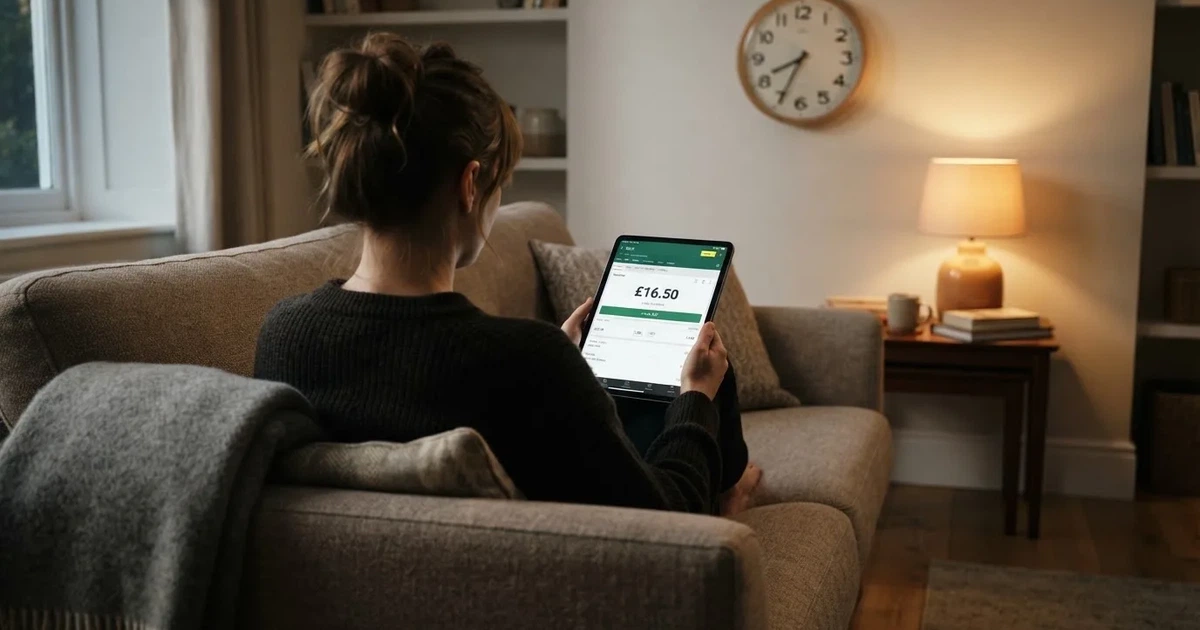
The marketing arrives first. “Get £40 in free bets.” “Risk-free first bet.” “£60 when you stake £10.” Every front page on every licensed UK sportsbook carries some version of it, and the page below the banner explains what the headline number actually costs. The shape of the answer in Great Britain changed in January 2026: the Gambling Commission capped wagering requirements on bonuses at ten times their value, and barred offers that bundle sports betting with casino, bingo or lottery play. The headline sums are still the headline sums. What sits underneath them, in the small print, is now narrower than it used to be.
This is a working guide to what those offers are worth, written for the punter who actually claims them. It names the ten bookmakers the page reviews, sets out how each sign-up offer reads once the terms are unfolded, and traces the consequence of every requirement: the qualifying bet, the minimum odds, the wagering multiple, the expiry window, and what happens to the stake of a free bet when it wins (it isn’t returned). The closing pages put numbers to the work the bonus demands and explain where to check, line by line, that a bookmaker holds the licence it claims to.
Responsible gambling: the part the offer page tends to skip
A welcome offer is a marketing tool, and every operator on this page is bound by the same set of safer-gambling rules. The headline is the wagering cap, but the architecture around it is what changes the day-to-day cost of an account.

Every Gambling Commission remote licence carries a duty of care that begins before the first bet. Name, address and date of birth are verified before a deposit goes through, which means an account at a licensed bookmaker cannot be opened anonymously, and any free bet or bonus credited to it is also gated by the same check. The customer-facing expression of that duty is the safer-gambling toolkit: deposit limits a customer can set on a fixed time frame, time-outs, and the national self-exclusion register, GAMSTOP, that a customer can sign up to for six months, one year, five years, or five years with auto-renewal. After the minimum period, the exclusion stays in place for a further seven years unless the customer asks GAMSTOP to remove it. The register is mandatory for every online operator licensed in Great Britain, which is the group this page covers.
Two further checks are layered on top. A financial vulnerability check, in force since 30 August 2024, triggers when deposits minus withdrawals cross £150 in a rolling 30 days — a public-record check, not an income check. Above that threshold, an operator may run a check for markers like bankruptcy or county court judgments, and ask follow-up questions where they appear. Financial risk assessments, the affordability checks discussed in the press, sit on a separate timeline: announced in a staged plan published on 7 July 2026, with no start date. The “first phase” of deposit-limit rules under RTS 12 has applied since 31 October 2025; a second phase, postponed to 30 September 2026, is not yet established as live in the public record this guide consults. There is no state-set ceiling on what a customer can deposit; the limit is the customer’s choice, and the operator must offer the controls to set one.
The cost of a bonus is paid in bets, and the help available to anyone who finds the cost climbing is real. GamCare runs the National Gambling Helpline. GambleAware funds treatment. NHS gambling clinics operate in person. Gamblers Anonymous runs meetings in most UK cities. A welcome offer is not a reason to skip the safer-gambling settings on the account it sits in, and the registration pages for any of the bookmakers reviewed below make those settings visible from the start.
Bonuses and free bets: the shape of the offer in 2026
The honest description of a UK sign-up offer in 2026 runs through three layers. The first is the headline number on the landing page. The second is the qualifying action, the deposit, the first bet, the minimum odds, that releases it. The third is what the free bet or bonus actually pays when it lands. Every layer is a separate decision, and every one of them has a number attached.
A free bet, in the British sense, is a token credited to the account after a qualifying bet has settled. Its stake is not returned with a winning free bet — a £10 free bet at odds of 3.0 returns £30, not £40, because the £10 stake disappears the moment the bet is placed. That rule is the single most expensive line in any offer, and it is the line most often missed. A “refund” framed as a free bet, even when the marketing calls it a stake-back, is a free bet by another name; the stake is not returned, and the customer has not been made whole. Cash bonuses, which sit on the account as withdrawable money once the wagering requirement is met, are rarer and are now constrained by the Commission’s 10x cap on wagering.
Wagering requirements are the second layer. A wagering requirement is the number of times the bonus, or sometimes the bonus plus the deposit, must be turned over in qualifying bets before any winnings become withdrawable. The Commission’s cap, in force since 19 January 2026, puts a ceiling of ten times on that requirement. A £10 bonus with a 50x wagering condition would have demanded £500 of qualifying bets before withdrawal; under the cap, no more than £100 of qualifying bets is needed. The cap is a hard ceiling and binds every operator licensed in Great Britain; an offer above it is not lawful to advertise.
Minimum odds are the third. Most welcome offers demand the qualifying bet at minimum odds of 1/1 (2.0) or higher, and free-bet tokens, when they are used, carry their own minimum-odds floor — typically 1/2 (1.5). The number looks small but it rules out the long-odds, low-margin bets a customer would otherwise use to clear a wagering requirement quickly. A free bet at 1.5 is a bet where the bookmaker’s margin is doing real work against the customer; over the volume of bets needed to clear a bonus, that margin compounds.
Expiry windows complete the picture. Welcome free-bet tokens at the operators reviewed below expire within seven days of issue, occasionally within forty-eight hours. A seven-day expiry on a £40 free bet is not a casual window: the customer has one weekend, in practice, to find a market, place the bet and let it settle. The smaller the window, the harder the offer is to clear, and the closer the offer reads to a marketing line that was never meant to be used.
Mixed-product promotions are now out of bounds. A “bet £20 on football to get free spins” type offer, an offer that demands play across sports betting and casino, or across sports betting and bingo, has been banned since 19 January 2026. The result is that the welcome pages of UK-licensed bookmakers in 2026 look narrower than they did in 2024: each offer stands alone on its product, and the cross-sell to casino bonuses is no longer bundled in. Whether the 10x cap applies to free bets with no wagering condition is not established in the public record, and the answer is best read from each operator’s own terms. Welcome offers for new GB customers, the focus of this page, sit on the product the bookmaker wants the customer to start with, and the rest of the product catalogue is reached afterwards on its own terms.
Ranking the field: ten UK bookmakers, side by side
The ten bookmakers below hold a Gambling Commission remote licence for Great Britain and are reviewed on the strength of their sign-up offer, the headline features around it, and the practical shape of the account on day one. Each write-up ends with a verdict, the page’s own judgement of where the brand fits. The table that follows gives a panoramic view across the field, and the sections after it close each operator in turn.
| Brand | Gambling Commission licence and holder | What the operator’s own terms state on welcome offers and key terms |
|---|---|---|
| Hollywoodbets | Remote licence 053028-R-330019-013 (Commission account 53028); holder Hollywoodbets International UK Limited | First qualifying losing acca of £10+ with 3+ legs at 4/1 or greater, settled within 7 days, returns the stake as a free bet of up to £30 |
| Fitzdares | Remote licence 000400-R-103839-030 (Commission account 400); holder Fitzdares Limited | Apple Pay, Mastercard and Visa accepted; Visa withdrawals usually same-day, Mastercard up to 48 hours |
| Tote | Remote licence 054779-R-331321-008 (Commission account 54779); holder TDCO Limited | Pool-betting specialist; sign-up offer described under the operator’s own terms and customer terms |
| BetVictor | Remote licence 039576-R-319370-028 (Commission account 39576); holder BV Gaming Limited | Regular price boosts, acca offers and free bets on selected events, with welcome offers shown in the app |
| Bet600 | Remote licence 044731-R-323941-016 (Commission account 44731); holder Tyche Tech Limited | Five qualifying single bets of £10+ at Evens (2.0) or greater within 7 days, then one £10 free bet credited |
| Fitzwilliam Sports | Remote licence 048760-R-335434-009 (Commission account 48760); holder SBKI Limited | Capped-membership Dublin bookmaker; “High Stakes Welcome” subject to compliance criteria |
| Betfair | Remote licence 039439-R-319330-013 (Commission account 39439); holder PPB Counterparty Services Limited | In-play betting, Bet Builder, free live streaming on UK and Irish racing and football, 90 Minute Payout market |
| Smarkets | Remote licence 039173-R-319366-011 (Commission account 39173); holder Smarkets (Malta) Limited | SBK sportsbook welcome: £20 first deposit and £20 bet at minimum odds of 3.0 for £60 in free bets within 48 hours |
| LiveScore Bet | Remote licence 056859-R-332720-005 (Commission account 56859); holder LiveScore Betting and Gaming (Gibraltar) Limited | Debit cards, Apple Pay, PayPal, Pay by Bank (Open Banking) and Revolut Pay accepted |
| bet365 | Remote licence 055148-R-331498-002 (Commission account 55148); holder Hillside (UK Sports) ENC | Bet Builder+, Super Boosts, Winnings Boosts on Bet Builders and selected singles, daily Bet Boosts |
The licence numbers above are drawn from the Gambling Commission’s public register; each can be verified by searching the register by business name, trading name, domain or account number. The welcome terms are the operators’ own, as published on their sites or in their apps in October 2026. The brand on the front of the shirt is not always the company that holds the licence: Paddy Power and Betfair run under PPB Counterparty Services Limited, Ladbrokes and Coral under a single group, and so on. They are not independent operators, and the page treats them as licensed under their holder.
Hollywoodbets: a stake-back on a losing accumulator
Hollywoodbets lands in the UK market with a welcome offer built around an accumulator. A new customer who deposits £10 or more by card and places a first qualifying losing accumulator, with at least three legs, odds of 4/1 or greater, settled within seven days, gets the stake back as a free bet of up to £30. One free bet per customer. The acca-first design fits the South African bookmaker’s football-heavy programme and reaches the audience it is built for, the punter who already bets multiples. The trigger is a loss, not a win, which makes the offer a partial insurance on the first bet rather than a free-bet reward for settling one.
The free bet that arrives is still a free bet: the stake is not returned on a win, and the token itself expires on the operator’s own clock. The 4/1 minimum combined odds, equivalent to decimal 5.0, is steeper than the 1/1 (2.0) floor most welcome offers carry, and that is the part of the offer that does the most work. An acca at 4/1 with three legs is a bet with three short-priced favourites stacked, and a single upset on any leg wipes the stake. The refund is the safety net. Read as a whole, the offer suits a customer who was already planning an acca and treats the welcome as a rebate on the first one. The verdict: a useful offer for the football-acca customer, weaker for anyone who bets singles.
Fitzdares: premium positioning, fast Visa withdrawals
Fitzdares positions itself as a premium bookmaker, and the welcome offer it shows on landing reads in that register. The site’s accepted payment methods are Apple Pay, Mastercard and Visa, with Visa withdrawals usually landing the same day and Mastercard withdrawals taking up to forty-eight hours. For a customer whose edge is moving money quickly in and out, the Visa pipeline is the headline number on this operator. Fitzdares has held a Gambling Commission licence under its own Fitzdares Limited since the original account was opened; the Commission account number is 400, one of the longest-running remote licences on the register.
The premium positioning is also the offer’s ceiling. Fitzdares’ app store listing and on-site materials describe a curated sportsbook rather than a wide promos schedule, and the welcome offer sits inside the operator’s own customer terms rather than a long banner list. The value is in the experience, the payout speed, and the absence of friction; the value is not in headline-grabbing free-bet sums. The verdict: suited to the customer who bets a few serious wagers a week and wants the cash-out pipeline to be quick, less suited to the bonus hunter comparing headline numbers.
Tote: a pool-betting specialist, distinct offer shape
Tote runs under a pool-betting licence rather than a fixed-odds general betting licence, which puts it in its own category on the Commission’s register. Tote.co.uk is the home of UK pool betting on horse racing, with dividends declared after the race rather than fixed odds set in advance. The welcome offer Tote shows sits under the operator’s own terms and customer terms, and the pool-betting mechanics are a different read from a fixed-odds sportsbook.
The consequence of the licence type is that any comparison with a fixed-odds bookmaker has to account for the product. A Tote dividend is shared among winning tickets after the pool is closed; the bookmaker’s margin is implicit in the takeout, not declared as a price. A customer used to fixed odds on a Saturday afternoon has to learn a new vocabulary here, and the welcome offer is best read as an entry into that product rather than as a free-bet stand-in. The verdict: a different shape of betting on a different licence, worth a separate read rather than a row in a fixed-odds comparison.
BetVictor: a long-standing licence, a steady welcome
BetVictor has held a Gambling Commission remote licence under BV Gaming Limited since the original account was opened, and the licence number is on the public register at Commission account 39576. The app store listing and on-site materials describe regular price boosts, acca offers and free bets on selected events, with the welcome offer shown in the app and governed by the operator’s customer terms. BetVictor’s app presence in the UK is established, and the welcome offer the customer sees on first deposit is the headline number, the qualifying terms, and the small print around expiry.
The offer sits on a long-standing operator with a wide sportsbook and a long track record of UK-facing products. The price boosts and acca offers are layered on top of the welcome, and the customer’s day-to-day experience after the welcome is the place the operator earns its margin. The verdict: a steady mainstream UK bookmaker, suited to the customer who wants a familiar app and a welcome offer that does not have to be decoded.
Bet600: a five-bet qualifying hurdle
Bet600’s app welcome offer demands at least five qualifying single bets of £10 or more, at minimum odds of Evens (2.0) or greater, within the first seven days of registration, before one £10 free bet is credited. The structure is unusual: the offer is not a “bet £10, get £30” headline, it is a volume play, and the qualifying hurdle is the page’s own judgement of what kind of customer this offer is for. A new account holder who plans to place five or more single bets in their first week will hit the threshold without much effort; a new account holder who was going to place one bet will not.
The free bet that follows is still a free bet: the stake is not returned on a win, and the token expires on the operator’s terms. The five-bet qualifying hurdle is the part that costs the customer real money in the qualifying period: at Evens (2.0) or greater, the bookmaker’s margin is working on each of the five bets, and the customer is paying that margin in the expectation of a single £10 token. The verdict: a thin offer for the casual customer, a reasonable offer for the high-volume bettor who would have placed the five bets anyway.
Fitzwilliam Sports: a high-stakes welcome on a capped book
Fitzwilliam Sports describes itself as a Dublin bookmaker with capped membership, and the welcome it offers is a “High Stakes Welcome” subject to compliance criteria. The operator’s licence is held by SBKI Limited on the Commission’s register, account number 48760, and the site is one of a small number of UK-facing books run on a membership rather than open-registration basis. The compliance criteria that gate the welcome are the operator’s own and live in its terms.
A capped-membership bookmaker is not the same product as a high-street chain. The welcome is shaped for the high-stakes customer who is comfortable being screened against the operator’s criteria, and the offer sits inside a smaller product catalogue than a mainstream sportsbook carries. The verdict: a niche product for a niche customer, worth a look for the bettor who already has an account and is comparing high-stakes welcome structures across a handful of Irish-rooted books.
Betfair: exchange and sportsbook, two products on one licence
Betfair runs both a betting exchange and a fixed-odds sportsbook, and the licence on the public register, held by PPB Counterparty Services Limited, covers the sportsbook and the exchange under the same Commission account. The sportsbook product carries in-play betting, Bet Builder, free live streaming of UK and Irish horse racing and football within the app, and a 90 Minute Payout market on selected football matches. The exchange is its own product with its own back-and-lay mechanics; the welcome offer and the day-to-day sportsbook experience are the focus of this section.
The 90 Minute Payout market is the part of the offer that does the most work for a customer who bets football. Settled on the result after 90 minutes rather than after extra time and penalties, it changes the shape of an acca in cup competitions. The free live streaming on UK and Irish racing and football is the part that adds the most day-to-day value. The welcome offer is published on the sportsbook product and governed by the operator’s customer terms. The verdict: a strong sportsbook product for the football-and-racing customer, and a separate exchange that the customer can choose to use or not, on the same licence.
Smarkets: the SBK sportsbook, an aggressive welcome on a new product
Smarkets runs an exchange on its main brand and a separate sportsbook product, SBK, on the same Commission account. SBK’s UK welcome offer is a £20 first deposit and a £20 bet at minimum odds of 3.0 for £60 in free bets within forty-eight hours, with Cash Out, Bet Builder and live horse racing streams inside the app. The headline is generous for the segment; the qualifying bet is a single bet at decimal 3.0, and the free bets that follow expire within forty-eight hours of credit.
The forty-eight-hour expiry is the part that does the work. A £20 free bet expiring in forty-eight hours is a token that has to find a market quickly, and the operator’s terms and minimum-odds floor do the rest. The minimum qualifying odds of 3.0 are steeper than the 1/1 (2.0) most welcome offers carry, and the welcome effectively prices the casual customer out: the qualifying bet at 3.0 has to win, and the bonus structure only pays out if it does. The verdict: a strong headline for the high-volume customer who can absorb a 3.0 minimum and a forty-eight-hour expiry, weaker for the casual first-time customer.
LiveScore Bet: a payments-led operator, with a clear welcome
LiveScore Bet’s payment set is the cleanest on this page: debit cards through Visa and Mastercard, Apple Pay, PayPal, Pay by Bank through Open Banking, and Revolut Pay. The operator’s licence is held by LiveScore Betting and Gaming (Gibraltar) Limited, Commission account 56859, and the sportsbook product sits on the same parent brand that runs the LiveScore scores app. The welcome offer is published in the app and on the site, and the payment set is the operator’s own choice rather than a regulatory requirement: no bookmaker is obliged to offer any particular e-wallet or bank-based method.
The clean payment set is the headline on the operator profile. A customer who keeps a PayPal balance and wants a bookmaker that pays back to it without a card on file will land here naturally, and a customer who wants to push money in by Open Banking and pull it back the same way has the same route. The verdict: a mainstream UK sportsbook with a payment set built for the customer who pays in and pulls out by the same method, and a welcome offer that fits the operator’s everyday product.
bet365: a wide sportsbook, the deepest product catalogue on the page
bet365’s product catalogue is the deepest on this page. Bet Builder+ combines markets from one event into a single bet, available pre-match and in-play. Super Boosts and daily Bet Boosts run on selected events. Winnings Boosts apply to Bet Builders and selected singles. The sportsbook licence is held by Hillside (UK Sports) ENC, Commission account 55148, and the brand has held a UK remote licence across multiple account iterations for years. The welcome offer is published in the app and on the site and is governed by the operator’s own customer terms.
The depth of the catalogue is the verdict. A customer who wants a single bookmaker with the deepest in-play product, the most acca enhancements, and the most consistent live streaming, will land here without much shopping. The welcome offer is the entry point, and the day-to-day product is where the relationship earns its margin. The verdict: the broadest product on the page, suited to the customer who wants one account for the whole year and is willing to learn the app rather than to switch between sportsbooks.
How the offer actually plays: the core of a sign-up bonus
A sign-up offer in Great Britain has a clean shape, and the shape has not changed under the 10x cap. The first deposit opens the account. The first bet at the operator’s minimum odds settles. The free bets, or the bonus, are credited. The customer has seven days, in most cases, to use the free bets before they expire. The 10x cap limits how much of the bonus has to be turned over in qualifying bets before winnings become withdrawable; where the bonus carries no wagering condition, the cap is silent, and the operator’s own terms govern.
The qualifying bet is the first piece of real money the customer puts down. Most UK welcome offers demand a minimum stake of £5 or £10 at minimum odds of 1/1 (2.0) or greater, with a debit card or instant bank transfer; e-wallet deposits are often excluded from the qualifying deposit at mainstream brands, because the marketing teams want the deposit to land on a payment method they can later promote. A qualifying bet at 2.0 is a coin-flip plus the bookmaker’s margin, and the margin is the part the customer is paying to enter the offer.
The free bets that follow are the offer’s headline number. Coral’s welcome, for example, credits £40 in free bets when a £20 bet is placed at minimum odds of 2.0, with the free bets issued within seven days and expiring seven days after issue. Unibet’s welcome credits £40 in free bets on the same qualifying structure, with the same expiry window. Hollywoodbets’ welcome is a stake-back on a first losing acca, with up to £30 refunded as a free bet, and the trigger is a loss rather than a win. Each offer is the same shape with different numbers, and the consequence of each is in the qualifying bet, the minimum odds, the free-bet expiry, and the minimum-odds floor on the free bets themselves.
The wagering cap is the change that matters in 2026. Where a bonus carries a wagering condition, the cap binds at ten times the bonus. A £10 bonus at 10x needs £100 of qualifying bets; a £10 bonus at 50x would have needed £500 and is no longer lawful. The cap does not change the size of the free bets, which are governed by the operator’s own terms, and it does not change the qualifying bet, which is governed by the operator’s own terms. It changes the total volume of betting a customer has to do to clear a bonus, and that is the change that hits a customer with a small budget hardest.
Statute and licence: how to check what an operator actually holds
The legal frame around a UK sign-up offer is short and well-defined. The Gambling Commission, a non-departmental public body sponsored by the Department for Culture, Media and Sport, licenses the whole commercial market under the Gambling Act 2005, which covers Great Britain. Northern Ireland sits outside the Act and has its own older law; a GB licence is not a Northern Ireland licence, and the rest of this page refers to “GB-licensed” and “Great Britain licence” rather than “UK licence”. Since the Gambling (Licensing and Advertising) Act 2014, an operator whose remote facilities are used in Great Britain needs a Commission licence wherever it is based; a Curaçao, Maltese or Gibraltar licence is not a substitute. There is no state monopoly and no cap on the number of licences.

The licence types that cover a sportsbook are remote general betting standard (real events), remote general betting standard (virtual events), remote general betting limited, remote pool betting, and remote betting intermediary. The first is the standard sportsbook licence, the fifth is the exchange licence. Tote, on this page, sits on a pool-betting licence; Smarkets and Betfair sit on an exchange or a combination of exchange and sportsbook licences. Each licence is its own category on the register, and a customer can search the public register by business name, trading name, domain or account number. The account number is the most reliable key: it is a Commission-assigned number that does not change between site redesigns and is the same across all of the brand’s domains.
The register is the whole test. A brand that holds a Commission account shows up under its licensee; a brand that does not is not licensed in Great Britain, however the marketing reads. Credit cards have been banned for gambling in Great Britain since 14 April 2020, including credit-card-funded payments through an e-wallet; debit cards and bank-based payments are not covered by that ban. The minimum age is 18, and identity is verified before a deposit goes through, which is why a sign-up offer cannot be claimed from an unverified account. A first deposit triggers the verification flow, and the free bets are credited to the same verified account.
The advertising frame is one level up. The Commission does not license advertising; the ASA enforces the CAP Code (non-broadcast) and the BCAP Code (broadcast), alongside the Commission’s LCCP marketing conditions. CAP Code section 16: marketing must be socially responsible, must not be of strong appeal to under-18s, and no one who is or seems to be under 25 may be featured gambling or play a significant role in the advertisement, with an exception for marketing placed where a bet can be made directly. The rule concerns who may appear in the advertisement, not who may bet. “Whistle-to-whistle” is an industry code rather than law: betting advertisements are not shown on TV from five minutes before a live sporting event to five minutes after it, before the 9pm watershed, with horse and greyhound racing excluded. The Premier League clubs’ withdrawal of gambling sponsorship from the front of matchday shirts, from 2026/27, with sleeves and hoardings remaining, is voluntary, not law. None of this changes the offer; it changes the marketing around it.
The tax frame is the operator’s, not the customer’s. The player pays no tax on betting winnings in Great Britain. General Betting Duty is the operator’s tax on gross profits, currently 15%; from 1 April 2027 a new remote betting rate of 25% applies, while remote bets on UK horse racing, bets on self-service betting terminals in licensed premises, pool betting and in-person betting stay at 15%. Until 1 April 2027 the remote rate stays at 15%. Whether operators pass the duty on through odds is not established in the public record, and the rule that no tax is owed by the customer on winnings stands. The Commission’s statutory levy is a separate charge, not a tax.
The offshore frame is the rest of the picture. A GB licence is compulsory at the point of consumption. Providing gambling facilities in Great Britain without the licence the Act requires is an offence under section 33 of the Gambling Act 2005, aimed at the operator. No offence aimed at a customer who bets on an unlicensed site was found in the public record; the loss for a customer is the loss of protection. No GAMSTOP coverage, no Commission complaints route, no approved dispute-resolution body, no British consumer redress if funds are withheld, no binding by the 10x bonus cap or the £150 vulnerability check. Enforcement is disruption rather than blocking: cease-and-desist notices, search-engine referrals, work with registrars, hosts and payment providers. The framing that holds: licensed means checks, limits, GAMSTOP and the bonus cap, with verification before the first bet; unlicensed means none of those protections and possible loss of funds. Neither is “the safe choice” by default.
Putting a number on the bonus: a worked example
Coral’s sports welcome offer is a clean shape to put numbers on. “Get £40 in free bets when you bet £20”: a new GB customer deposits and places a sports bet of £20 or more at minimum odds of 2.0 (1/1), with £40 in free bets issued within seven days and expiring seven days after issue. The free bets are credited as separate tokens and are governed by Coral’s own terms.
The qualifying bet is a £20 wager at minimum odds of 2.0. A winning qualifying bet returns £40 (stake plus winnings), a losing one returns nothing. The £40 in free bets is the bonus; the bonus carries no wagering requirement under the headline terms, and the 10x cap is therefore not engaged. The free bets, when used, are free bets: the stake is not returned on a win, and the token expires seven days after issue. A £20 free bet at odds of 3.0 returns £60; a £20 free bet at odds of 5.0 returns £100. The headline £40 is the value at credit, not the expected value at settlement.
The arithmetic the bonus actually performs runs in two directions. The first is the value of the free bets at typical odds. At 3.0, a £20 free bet returns £60 in winnings with no stake; at 5.0, the same free bet returns £100. Over the two free-bet tokens, the headline £40 in free bets returns somewhere between £80 and £200 in winnings, depending on where the customer places them. The second direction is the cost of the qualifying bet. The £20 stake at 2.0 pays £40 on a win and £0 on a loss; the implied margin on a 1X2 market at 2.0 is around 5% to 8% across a typical bookmaker’s line, and the customer’s expected loss on the qualifying bet is the margin times the stake. Over one qualifying bet, that is a small number. Over the full welcome cycle across the segment, it adds up.
The arithmetic of a bonus is a band, with its conditions, not a single figure. Under the offer’s own terms, with a £20 qualifying bet at 2.0 and £40 in free bets at typical customer-chosen odds, the customer is exchanging £20 of stake (with its expected loss at the market margin) for £40 of free-bet value (with its expected return at the market margin, less the loss of the stake). The 10x cap does not apply to a no-wagering free bet; where a bonus carries a wagering condition, the cap binds at ten times the bonus and limits how much qualifying turnover is needed before winnings become withdrawable. The value for the punter is the band, the conditions, and the consequence of every number, rather than a single point estimate.
A worked turnover runs the other way. Where a bonus carries a wagering condition of 10x on a £10 bonus, the required turnover is £100. At a typical stake per bet of £10, that is ten qualifying bets; at a stake of £5, twenty. The minimum odds of 1/1 (2.0) or greater rule out low-margin, long-odds bets and push the customer into a market where the bookmaker’s margin is doing real work. The expected cost of clearing the bonus is the turnover times the market margin; the customer is paying, in expectation, the margin of the qualifying market on the volume of bets needed. Where the wagering condition is below 10x, the band narrows; where it is the cap, the band is the widest the operator can offer. The shape of the offer is in the conditions, and the conditions are the page’s subject, not the headline number.
The British way: native terms and the shape of the market
British betting carries a vocabulary of its own, and the page uses it in the way a punter at a counter would use it. A “punter” is a customer; a “bookie” is a bookmaker. A “stake” is the money risked; a “return” is stake plus winnings; a “profit” is the return less the stake. “Odds” in the UK are fractional, with 5/1, 11/4 and “evens” (1/1) the everyday shapes, and “odds-on” meaning shorter than evens. Decimal odds, 6.00, 3.75, 2.0, are the international form, and the conversion from fractional a/b is a divided by b plus 1. SP is the starting price, the on-course odds declared at the start of a race; BOG is best odds guaranteed, the promise that a backer gets the bigger of SP and the price taken when the bet was placed.
A “single” is one selection; a “double” is two; a “treble” is three; an “accumulator”, shortened to “acca”, is four or more. An “each-way” bet is two bets of equal stake, one on the win and one on the place, with the stake doubling and the place terms varying by race and operator. A “Bet Builder” or “same-game multi” combines markets from one event into a single bet. “Cash Out” settles a bet before the event has finished, at a price the bookmaker sets in real time. The full multiple-bet catalogue runs Trixie (4 bets), Patent (7), Yankee (11), Lucky 15, Super Yankee or Canadian (26), Heinz (57) and Goliath (247); the total stake is the unit stake times the number of bets.
A “free bet” or “bet credit” is a token credited under an offer, with the stake not returned on a win. “Enhanced odds” and “price boost” are the same shape: a market offered at a higher price than the headline line, often on a specific selection, for new or existing customers. “Acca insurance” refunds the stake of a losing accumulator as a free bet, often with a cap, and the conditions that govern it are the conditions of the offer. “Ante-post” is a bet placed before the final declarations, where the stake is lost on a non-runner; the Rule 4 deduction is the bookmaker’s rule for reducing payouts when a withdrawal changes the field.
The British spellings are the right spellings: licence as a noun, license as a verb, organisation, whilst. Currency is £ before the number with no space: £10, £5,000, not 10 GBP. Dates are written day-month-year: 9 April 2025, not April 9, 2025. Percentages are closed up: 25%, not 25 %. “Fiver” and “tenner” are colloquial for £5 and £10. The combination of these habits is what marks the page as written in the language of the punter it addresses, and the rest of the page uses them.
Picking the right offer: a short guide to the decision
The decision between welcome offers in 2026 runs on three questions. The first is what kind of punter the customer is: an acca customer, a singles customer, a horse-racing customer, a football customer, an in-play customer. The second is the customer’s bankroll: how much real money the customer is willing to put down on a welcome offer, and how much volume the customer expects to put through the account in the first month. The third is the terms the customer is willing to accept: a £20 qualifying bet at 2.0 is the standard; a £20 qualifying bet at 3.0 is steeper; a free-bet token expiring in forty-eight hours is a tighter clock than a token expiring in seven days.
The acca customer, who was going to place a £20 acca at 4/1 in the first week anyway, finds Hollywoodbets’ stake-back a clean offer: a free bet of up to £30 on a first losing acca, with the qualifying bet already in the customer’s plan. The singles customer, who bets singles at 2.0 or longer, finds Coral and Unibet closer to the standard shape: £40 in free bets for a £20 qualifying bet at 2.0, with seven days to use the tokens. The high-volume customer, who places five or more singles in the first week, finds Bet600’s qualifying hurdle suited to the volume. The high-stakes customer, comfortable being screened against a bookmaker’s compliance criteria, finds Fitzwilliam Sports’ “High Stakes Welcome” a niche product. The customer who wants one account for the whole year finds bet365’s catalogue the broadest on the page. The customer who wants a clean payment set and a familiar app finds LiveScore Bet a fit.
The bettor with a small budget has a different reading. A £20 qualifying bet at 2.0 costs the customer, in expectation, the market margin on £20. A £10 qualifying bet at 2.0 costs half as much. The free-bet tokens that follow are useful only if the customer can use them inside the expiry window, and a customer who places one bet a week will struggle to clear a seven-day expiry. The 10x cap helps a small-budget customer on a bonus with a wagering condition; it does not help a small-budget customer on a no-wagering free bet, where the cap is silent. The honest read is that the welcome offer rewards a customer who was going to bet anyway, and a customer who was not going to bet is paying real money for a token they may not be able to use. The decision is whether the welcome offer matches the customer’s existing pattern; if it does not, the welcome is not the deal it looks like.
Frequently asked questions
How are promo codes used at UK betting sites?
A promo code, where one is provided, is entered at the deposit or registration step on the bookmaker’s site or app, and it unlocks the welcome offer described in the operator’s own terms. In Great Britain, no working promo code is published on this page; offers are described as the operator states them, and the qualifying bet, minimum odds and expiry are the customer’s reference. Identity is verified before the offer is credited, and the verification flow is the part of the process that takes longest on a first deposit.
What is the maximum wagering requirement on a UK betting bonus?
The Gambling Commission’s promotion rules in force since 19 January 2026 cap wagering requirements on bonuses at ten times the bonus value. A £10 bonus with a 50x requirement would have demanded £500 of qualifying bets; under the cap, no more than £100 of qualifying bets is needed before winnings become withdrawable. The cap binds every operator licensed in Great Britain. Whether the cap applies to free bets with no wagering condition is not established in the public record this page consults, and the answer is best read from the operator’s own terms.
What do minimum odds and the wagering requirement mean in a sign-up offer?
Minimum odds are the floor below which a bet does not count toward the offer. Most UK welcome offers set the floor at 1/1 (2.0) for the qualifying bet and 1/2 (1.5) for the free-bet token. The wagering requirement is the number of times the bonus has to be turned over in qualifying bets before winnings become withdrawable. The 10x cap limits that number. A bonus with a 10x requirement on a £10 bonus means £100 of qualifying bets; a free bet with no wagering condition means the token is used once and any winnings are withdrawable on settlement.
Why is the stake of a free bet not paid back with the winnings?
A free bet is a token the operator credits under the offer, and the token is the customer’s stake. When the bet wins, the operator pays the winnings at the agreed odds, but the token itself is not returned. A £20 free bet at odds of 3.0 returns £60 in winnings, not £80. The rule is in every UK bookmaker’s free-bet terms, and it is the single most expensive line in any offer. A “refund” framed as a free bet, even when the marketing calls it a stake-back, follows the same rule.
Can a bet on sport be tied to a casino bonus under the Commission’s promotion rules?
No. The Commission’s promotion rules in force since 19 January 2026 ban mixed-product promotions: an offer that requires gambling on two or more product types, such as sports betting plus casino, sports betting plus bingo, or sports betting plus lottery, is no longer lawful. An offer must stand alone on its product, and the cross-sell to casino bonuses is no longer bundled in. The ban is a hard rule and binds every operator licensed in Great Britain.
How can it be checked that a bookmaker holds a Gambling Commission licence?
The Gambling Commission’s public register can be searched by business name, trading name, domain or Commission account number. The account number is the most reliable key; it is assigned by the Commission and does not change between site redesigns. The register is the whole test: a brand that holds a Commission account is licensed in Great Britain, and a brand that does not is not. The licence types that cover a sportsbook are remote general betting standard (real events), remote general betting standard (virtual events), remote general betting limited, remote pool betting and remote betting intermediary.
Free bets & offers – Rugbytipsters.com
Content created by the «Rugbytipsters.com» team
